

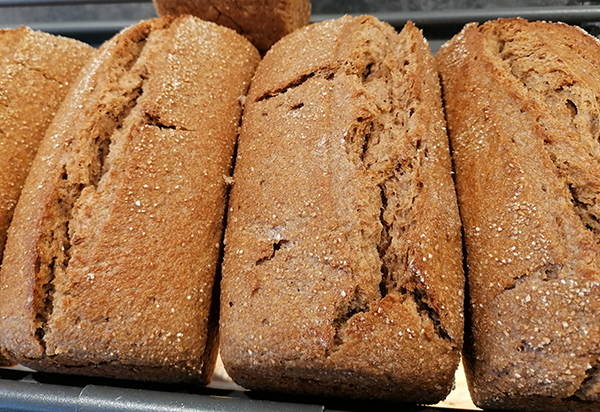
Up-to-date daily reports on the situation of refugees and those offering practical advice for everyday life formed—and continue to form to this day—the basis of tuenews INTERNATIONAL, initially in print versions and later online. Alongside this, however, cultural topics were included early on as well. The aim was to make the cultures of the countries of origin more understandable to other refugees and to German readers alike. This also addressed the intercultural encounter between these cultural customs and those of the host country, Germany. Such longer background articles were covered in the magazines. For example, there were in-depth articles on the situation of Muslim women who wear headscarves and the experiences of discrimination they face in German society. Three Muslim women (two with headscarves, one without) interviewed an Islamic theologian to find out what the Quran actually says about the question of the headscarf. Another example: how do refugees cope with Germany’s complex bread culture and its confusing names? “There’s a joke that says Germany has hundreds of types of bread, most of them called ‘that one there,’ closely followed by ‘no, the one next to it.’” This was recounted by a renowned baker in an interview with tuenews INTERNATIONAL. The annually recurring period of Ramadan was also repeatedly the subject of illuminating background reports.
For these longer articles, it often proved helpful to consult experts when the search for reliable sources was not straightforward. The editorial team therefore repeatedly sought contact with academics and practitioners. Interviews—and turning interviews into written articles—thus became a routine journalistic approach to complex topics.
New to the editorial team: archaeological and numismatic expertise
A completely new quality was added to the “Culture” section during the Corona period at the end of 2020 and beginning of 2021, when two new individuals came into contact with tuenews INTERNATIONAL: Youssef Kanjou, a Syrian archaeologist and anthropologist and former director of the National Archaeological Museum in Aleppo, became a member of the editorial team, and Stefan Krmnicek, an Austrian numismatist at the University of Tübingen, regularly wrote guest articles about ancient coins from countries of origin in the East that are held in the university’s museum. This turned the topic of “Cultures” into a genuine second “product line” of tuenews INTERNATIONAL—scientifically grounded and at the same time written in an accessible way.
In Youssef Kanjou’s first articles, for example, he discussed how the close coexistence of humans and animals as early as the Stone Age led to the first epidemics; how the discovery of a 2,700-year-old wine press in Lebanon was able to document the invention of viticulture in the Middle East; or how the first war on Syrian soil took place as early as 6,000 years ago—the oldest known reference to an armed conflict worldwide.
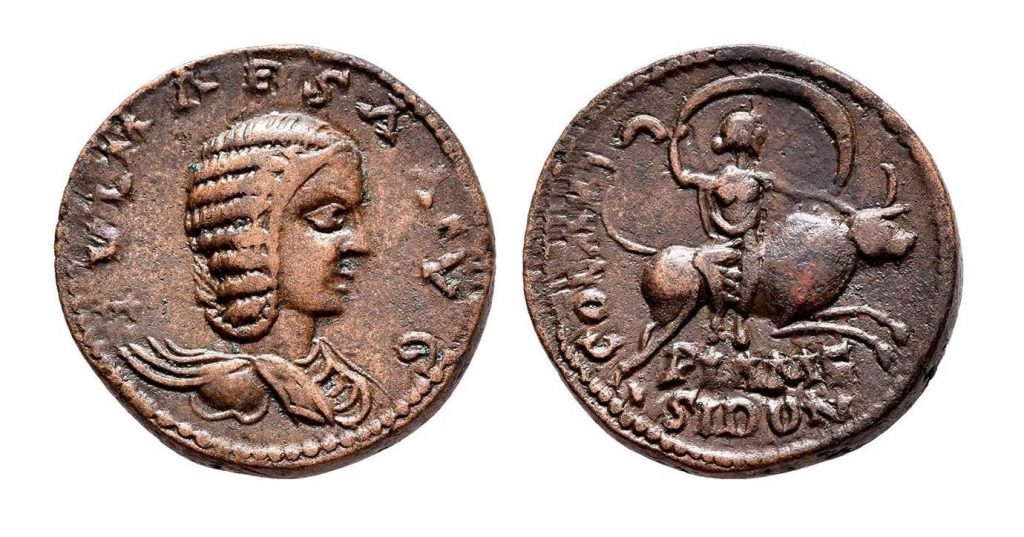
Ancient coins are usually considered a rather dry and difficult-to-decipher subject. Through his texts, Stefan Krmnicek showed what can be learned from these coins: for instance, that “Philip the Arab,” originating from what is now Syria, was able to become a Roman emperor, and that a Syrian woman even became the grandmother of two Roman emperors. A coin from the Hindu Kush reveals that a Greek kingdom extended as far as northern Afghanistan. A coin from Gaza City proves that in antiquity the place was one of the most important port cities in the region for the incense trade from the interior of the Arabian Peninsula.
Many clicks for migration as a driver of cultural evolution
What was particularly striking was that these articles on cultural history achieved the highest access figures of all articles and were each clicked several tens of thousands of times. It also became apparent that they were widely received worldwide, especially in Arabic and Persian, apparently spread through social networks.
Over the course of the following years, a kind of “red thread” developed almost by itself and without deliberate planning: a thematic focus on migration as the driving force of cultural evolution. Of course, it was no surprise that in the ancient high cultures of Mesopotamia on the Euphrates and Tigris the first writing systems, the first alphabets, the first number systems, and musical compositions emerged; that the world’s first schools were founded there and new traditions such as gravestones were established. All these cultural achievements made their way westward to what is now Europe.
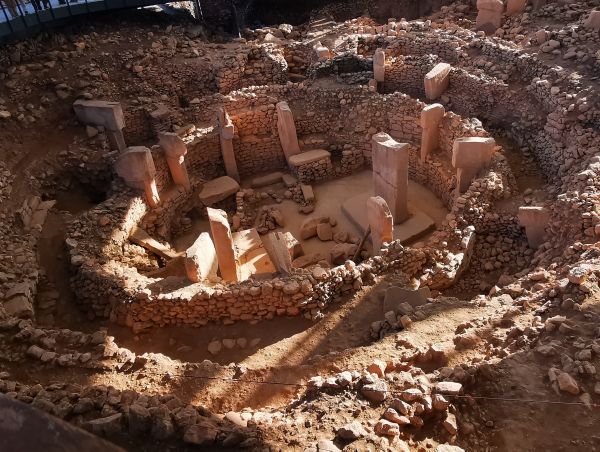
But tens of thousands of years earlier, the first modern humans of the species “Homo sapiens” had already moved from the Middle East to Europe, after settling there coming from Africa. Around 10,000 years ago, agriculture was “invented” in the Middle East, establishing sedentary life as a new way of living alongside nomadism, and the construction of gigantic cultic-religious complexes began. This cultural evolution was not, as previously assumed, driven by trade and exchange, but imported through the migration of many people from Anatolia to Europe—beginning 8,000 years ago and continued 2,000 years later by the so-called steppe riders from Central Asia. That these migration flows determine 90 percent of the genetic makeup of people living in Central Europe today, and thus also their light skin color, are entirely new findings of paleogenetics.
Andalusian development aid and the path of coffee houses
In the Middle Ages, this “development aid” from the East to Central Europe continued as well: the spread of Islam in the 8th century led to an 800-year period of cultural flourishing in the Andalusian realm in southern Spain. Its innovative developments in hygiene and medicine, astronomy, mathematics, architecture, agriculture, and irrigation systems also shaped medieval Central Europe. And even indispensable elements of everyday life today, such as cafés, are exports from the Middle East: the first coffee houses existed in Damascus and Aleppo and then began their unstoppable journey via Istanbul to Europe. All these historical and cultural developments—and much more—can be explored in articles by tuenews INTERNATIONAL.
Learning to understand Islam and Arab culture
Finally, there is another thematic area to be mentioned, for which editor Oula Mahfouz, an Arabic teacher from Damascus, is largely responsible. She created a series of articles countering the widespread lack of knowledge about the religion of Islam and the culture of Muslim countries, thereby also addressing a specific target group: interested German volunteers active in refugee support.
Topics included, for example, Khadijah, the first wife of the Prophet Muhammad; the terms “halal” and “haram”; the rules of marriage in Islam; but also “Damascus: the home of roses, irises, and jasmine,” Arabic calligraphy, and the invention of the game of chess.
By Michael Seifert
tun25121704
www.tuenews.de/en