

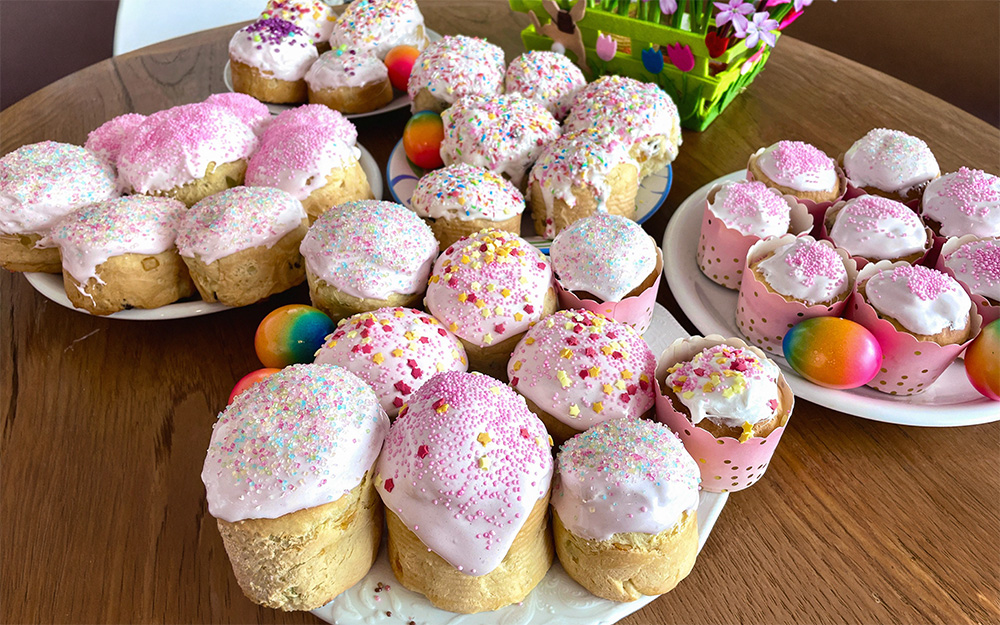
Easter in Ukraine has its own traditions. This festival is one of the most important events in the religious calendar. As the Orthodox Church uses the Julian calendar, the date of the festival often differs from Western Easter, which follows the Gregorian calendar. In 2026, for example, the Orthodox Church will celebrate Easter a week later, on 12 April.
40 days of strict fasting
Preparations for the festival include a period of fasting lasting around 40 days, with the last seven days before Easter considered particularly strict. This fast serves as spiritual purification and commemorates Jesus’ time in the desert. During this period, people abstain from animal products.
The last week before Easter has a specific significance. It all begins with Palm Sunday (Willow Sunday): a week before the festival, people celebrate Jesus’ entry into Jerusalem. As there are no palm trees in Ukraine, the faithful consecrate willow branches in church. These branches are regarded as a symbol of protection and blessing. On Maundy Thursday (Clean Thursday), families traditionally clean their houses and flats. Preparations for the festive meal also begin. On Good Friday, the faithful commemorate the crucifixion of Christ. This day is marked by deep mourning and reflection on his sacrifice for humanity. The preparations conclude with the packing of the Easter basket on Easter Saturday. On the night before Easter Sunday, solemn services (vigils) take place in the churches, lasting until dawn.
The symbols: Paska, Pysanky and Krashanky
The traditional Paska cake is the main dish on the table at Easter. People bake this bread using the finest flour, eggs, butter and raisins. The round shape symbolises the sun and the endless cycle of life. A well-risen loaf is seen as a harbinger of happiness and prosperity for the family. Every family in Ukraine has its own recipes and traditions when it comes to baking.
Pysanky, Krashanky and other forms of Easter egg decoration are an expression of Ukraine’s deeply rooted cultural heritage. The artistically decorated pysanky are created using a complex wax-resist technique featuring symbolic patterns such as stars or crosses and are regarded as a valuable cultural asset. Krashanky are dyed in a single colour and are intended for consumption. People traditionally dye the latter using natural materials such as onion skins for red and brown tones or various herbs. This underlines the close connection to nature and to traditional craftsmanship.
Easter: Community and Joy
After the morning service, the priest blesses the believers’ Easter baskets. A typical basket contains paska, painted eggs, sausage, bacon, cheese, butter and wine.
Easter breakfast begins with the family. Traditionally, everyone first shares a blessed egg and a piece of Paska. A central element is the Easter greeting: people greet one another with the words “Christ is risen!” (Chrystos woskres!), to which the reply follows: “Truly, he is risen!” (Woistynu woskres!).
Throughout Easter week, relatives and friends visit one another to exchange gifts and treats. Work is put on hold during this time, as the focus is on community and rejoicing in the Resurrection.
tun26033103