


An exhibition at the Limes Museum in Aalen sheds light on the relationship between the two cultures in the border regions along the Limes. One highlight is the unique finds from Germanic princely tombs in western Ukraine.
A bronze cauldron with three handles in the form of Germanic busts with so-called Suebi knots (a typical hairstyle), a bucket with women’s heads, cut glass cups and glass bowls, enamel-decorated drinking horn components made of copper alloy—these treasures can be seen until Easter 2026 in a special exhibition by the Baden-Württemberg State Museum and State Office for the Preservation of Historical Monuments at the Limes Museum in Aalen (https://www.limesmuseum.de/). They are part of the spectacular finds from two Germanic graves from the 2nd century AD, which were uncovered in 2017 in Kariv near the Polish-Ukrainian border. They were restored in 2024 at the State Office for the Preservation of Historical Monuments in Esslingen and can now be seen in their entirety for the first time.
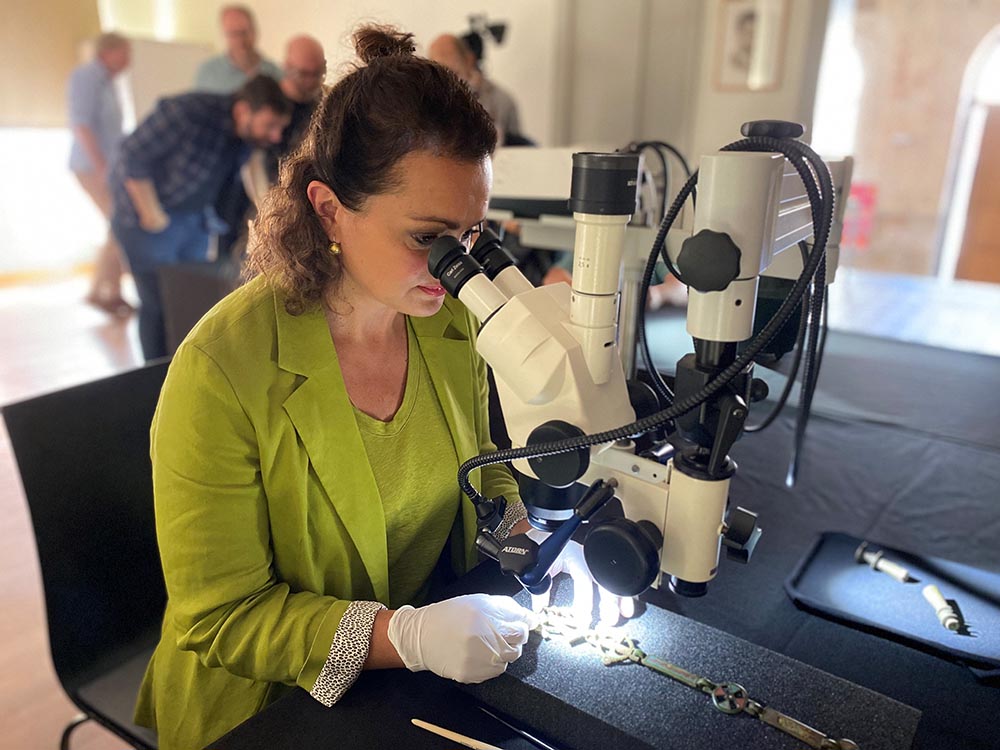
Key find in Germanic-Roman relations
For archaeologist Prof. Jan Schuster, the burial ground is a key find for research into Germanic-Roman relations. The graves can be dated to the time during the Marcomannic Wars or shortly thereafter and are certainly related to these events, Schuster said in a lecture. He is considered an expert on the study of the Germanic peoples in the first half of the first millennium AD.
Migration to the west
In the 2nd century AD, there was a large migration movement to the west into the middle Danube region. Germanic tribes were displaced from their territories east of the Vistula in what is now Poland and encountered the Romans. This led to conflicts, battles and negotiations. According to the archaeologist, there were many twists and turns: “Gifts were presented during these negotiations. This could be how the valuable Roman bronze cauldron ended up in the north.” Such imported goods were highly sought after by the Germanic tribes, as their value strengthened the position of the chieftains. Whether the prince of Kariv was a friend or foe of the Romans cannot be proven by the finds, said Schuster. In any case, he profited from the wars.
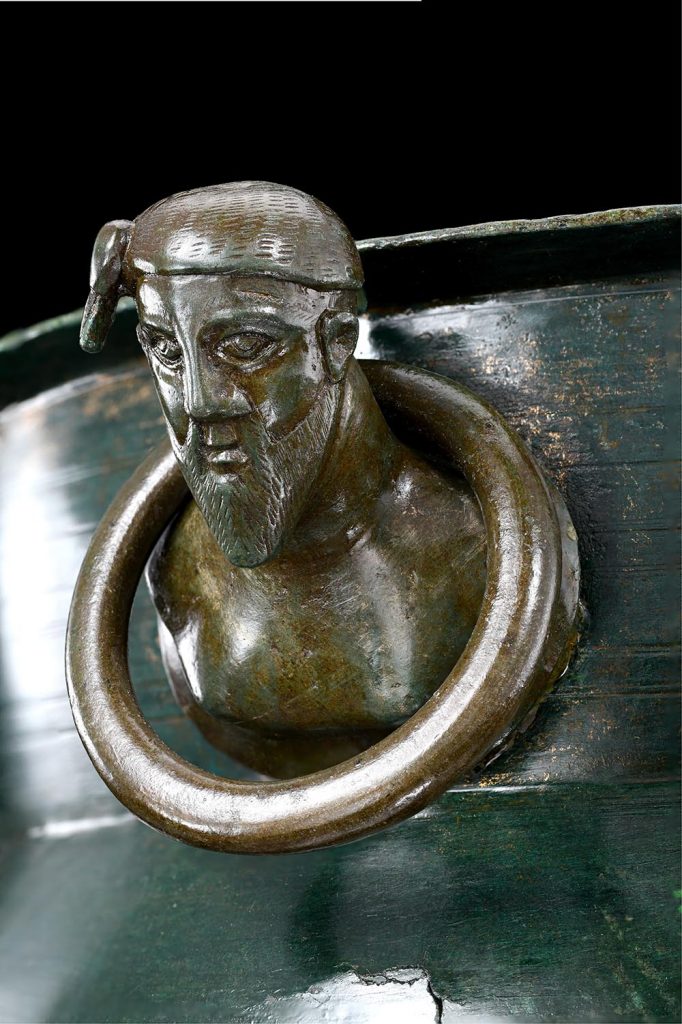
Germanic tribes on furniture fittings
Schuster is convinced that the high concentration of Germanic artefacts found in the central Danube region (i.e. in what is now western Slovakia and Czechia) indicates that Germanic tribes from the north settled there. The Romans had to come to terms with their new neighbours and the constant crisis situation. This is also reflected in art, for example in the depiction of Germanic tribes on everyday objects such as furniture fittings. People produced goods for the foreigners. Trade flourished, and everyone benefited from the exchange.
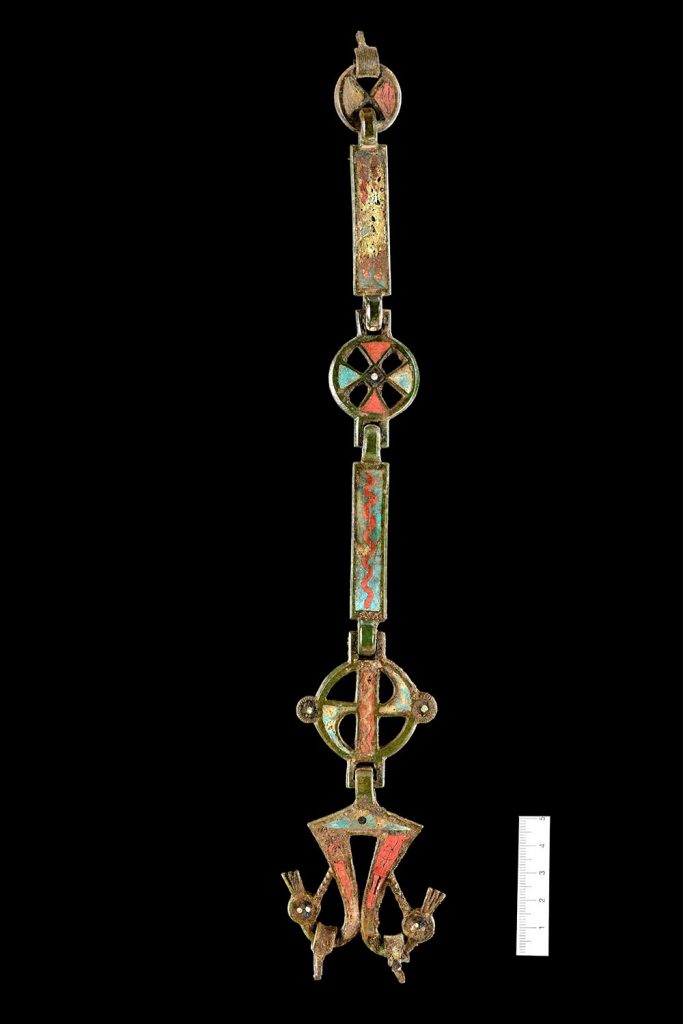
Coexistence in ancient Europe
The exhibition at the Limes Museum in Aalen focuses on this very coexistence in ancient Europe. It takes a look at the coexistence of contact, trade, cohabitation and open conflicts from the 1st to the 3rd century AD, a time when diverse encounters between foreign neighbours also took place in Baden-Württemberg. Archaeological finds from both cultures bring history to life. They bear witness to the encounters and everyday life of the people on both sides of the border—from weapons and wine vessels to Roman cities and Germanic villages to grave goods and inscriptions, according to a press release. But the exhibition also raises questions for the present: How do we deal with strangers? How do prejudices arise? And what can society today learn from history in order to find new ways of coexisting?
Further information at:
https://www.limesmuseum.de
https://www.swr.de/kultur/kunst/ausstellung-fremde-nachbarn-rom-und-die-germanen-limesmuseum-aalen-126.html
https://journals.ub.uni-heidelberg.de/index.php/berrgk/article/view/85520
tun24090303
The special exhibition at the Limes Museum in Aalen is open until 12 April 2026.
By Bernhard Kirschner
tun25112301