

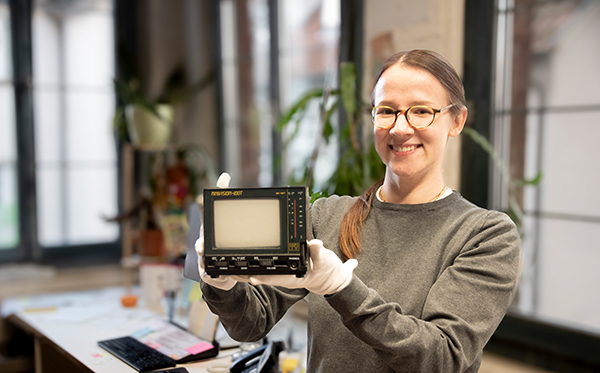
The stories of migrants are also ripe for the museum: historian Marina Chernykh wants to learn more about the lives of those Tübingen residents who came from all over the world and made Tübingen their home. In order to document their history in the Tübingen City Museum, she is looking for photos, documents, letters, work clothes and other everyday objects from the time of their arrival.
History is not just the paintings, books or collections left behind by kings, emperors or great statesmen and stateswomen. Everyday objects are also part of our cultural heritage. So too are all the things that remind us that people from foreign countries have been coming to Germany for a long time—bringing their stories and history with them. Historian Marina Chernykh works at the Tübingen City Museum and wants to record the history of migrants: from the “guest workers” of the 1960s to the refugees from the GDR to the modern refugee movements resulting from the wars in Afghanistan, Syria and Ukraine. “Your story is missing” is the title of her project, which will eventually culminate in an exhibition.
Greek letters
Until now, stories related to migration have been very much in the minority. “Of the 45,000 objects in the collection, only 19 deal with guest workers,” says Chernykh. And even those are mostly official documents—records of the company sports groups of the textile company Egeria, for example. “But we want to turn the perspective around,” says the historian. Biographies, experiences and memorabilia of migrants are to play a greater role in future. “Many people don’t realise that they are part of the city’s history,” says Chernykh.
For example, an electric typewriter with a spherical head found its way into the museum. It once belonged to the Greek translator Sotiros Pantelidis. The typewriter had three interchangeable ball heads, allowing Pantelidis to write in both German and Greek. Another piece of history is the small black-and-white television set that young Italian Antonie Pricci used in the early 1970s to do more than just pass the time: the little black box became her German and Swabian teacher.
Pennants from the sports club
The Tübingen City Museum is represented on the Museum Digital platform (www.museum-digital-de) with 29 items relating to migration history: in addition to the typewriter, these include pennants from sports clubs and letters for the display of one of Tübingen’s first ice cream parlours. Chernykh recently called again for people to contact the museum with their memories and found objects. After the last appeal, a total of four people came, some of them bringing bags of material to the museum. Chenykh has noticed that the children of the former “guest workers”—now often of retirement age themselves—are suddenly interested in their family history. But the historian does not want to wait for people to come to the museum. “I like to visit people at home and I speak Russian,” she says. She herself has a history of migration: she came to the GDR from Russia at the age of ten with her parents, who went to Dresden as visiting scientists. “I can still remember the notebooks we used to learn German.”
Contact the museum:
Anyone who has pictures or everyday objects related to their own migration history can contact Marina Chernykh:
Stadtmuseum@tuebingen.de
07071/204-1793
By Brigitte Gisel
tun25093006