

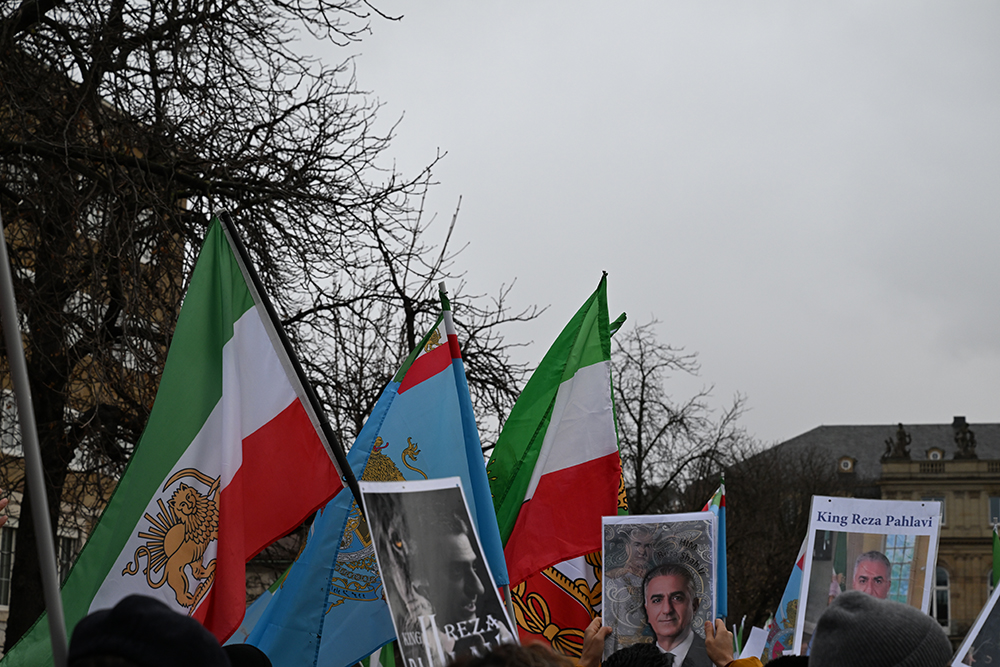
Iran expert Raha Bahreini from the human rights organisation Amnesty International criticises the “massive, unlawful killings to wipe out any resistance and silence the protesters”. An Iranian from south-west Germany experienced during a visit to his homeland how quickly innocent people are suspected of being “terrorists and rioters,” to use the regime’s terminology. In an interview with tuenews INTERNATIONAL, he talks about this and the situation in the country.
Reza Moradi (name changed) spent several weeks in Iran, including at the beginning of the protests and at their peak on 8 and 9 January. Due to air pollution, the pensioner from Germany wanted to wait until late in the evening to take a few steps with an 80-year-old man who was disabled after an accident in a major Iranian city.
There was a demonstration on the main street until around 10 p.m. The Tübingen resident heard drones. They circle above protests to monitor and identify opponents of the regime. Suddenly, motorcycles raced towards them. The men on them shouted, among other things, “Death to the enemies.” Then about 20 to 30 of them stormed into the narrow alley with automatic rifles and batons. They confronted Moradi and the old man: “Are you terrorists?”
Heavily armed militiamen outwitted
Moradi was able to outwit the regime’s henchmen with a trick. He pretended to be talking about “that unscrupulous Reza Pahlavi,” the eldest son of the last Shah, who was overthrown in 1979. Many people in Iran, as well as Iranians in exile, are pinning their hopes on the 65-year-old, who lives in the USA. Fortunately, they did not hear that eyewitness Moradi also insulted the Basij militia, a subdivision of the Islamic Revolutionary Guard Corps. One of them even apologised—whereupon the terror squad withdrew.
The visitor from Germany will not forget another event either. In front of a neighbouring house, he saw a black cloth and the picture of a 43-year-old man—no flowers as is usually the case. The relatives were forbidden from decorating the house. In order to bury the deceased, the family had to pay the regime “around 5,000 euros for the release of the body”. They told the guest about this. No funeral ceremony was allowed. After the funeral, the family had to return home immediately from the cemetery.
Countless dead and injured
The 43-year-old man is one of countless victims of the regime. The figures provided by human rights activists vary. They currently report at least 18,000 deaths, with the US magazine Time even reporting 30,000 deaths in just two days on 8 and 9 January. According to an older official government statement, there were around 3,200 deaths. The HRANA network in the US also estimated that around 27,000 people had been arrested.
The figures cannot be verified—partly because the mullah regime has blocked the internet. The social network Instagram is banned in Iran anyway. “There is no freedom of expression and the press—which is exclusively loyal to the regime—is full of propaganda,” says Moradi, summarising the possibilities for obtaining information. He has been living in Germany for almost 50 years, but regularly visits relatives and friends in Iran.
The shock of his neighbour’s death still haunts the visitor from Germany. The 43-year-old just wanted to drive his girlfriend home. In doing so, he had to “swerve into a narrow alley to avoid a hit squad”. The heavily armed men immediately started shooting. His girlfriend ducked. He was hit by a bullet in the neck. The commandos claimed to be “the saviours of Iran”. The population, on the other hand, simply calls them “murderers”. They often shoot specifically at the head and upper body. The man from the Tübingen district has often heard the word “murderer” in confidential conversations.
Inflation creates poor millionaires
“I witnessed one of the worst phases,” says Moradi about his visit to Iran: “The regime is killing its own people.” The protests at the end of December 2025 were triggered by the miserable economic situation. In the past, Iran had tourists as well as oil:
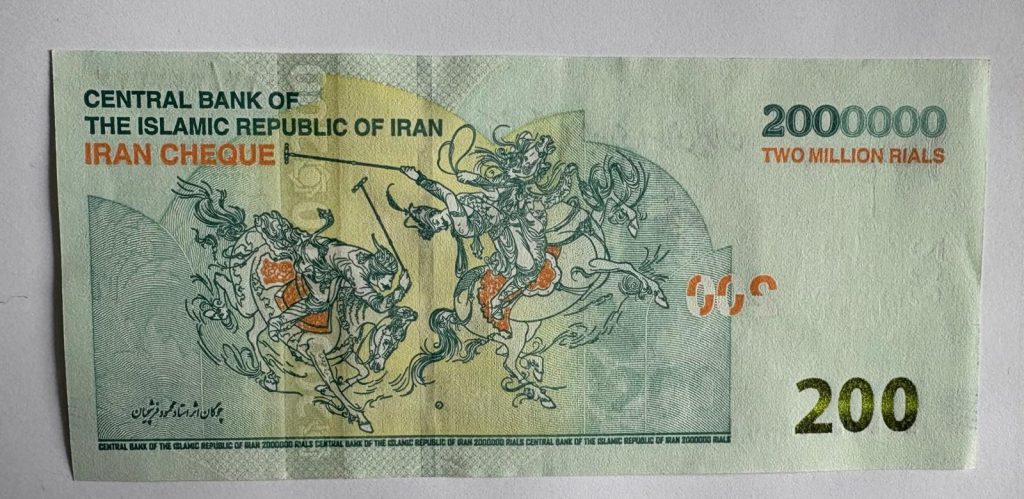
“Now there is nothing left.” Even those who own a two million rial note from the central bank “can’t even buy a chicken skewer” with it. Due to inflation, this banknote was worth only 1.30 euros during the visit. A kilo of minced meat cost ten million rials. Only the truly rich could afford it. Even government vouchers do not help the poor to survive. “I call the Iranians poor millionaires.”
After returning to Germany, the pensioner was distraught for days. He cannot get his conversations with young people out of his head. “They know exactly why they are taking to the streets.” He is certain that 80 per cent of the population rejects the regime and that at most 10 per cent support the mullahs. All the promises made by Ayatollah Ruhollah Khomeini during the Islamic Revolution in 1979 have been broken. Iran was supposed to become a paradise of freedom, social and economic progress without corruption, according to the religious and political leader at the time. “It has become a million times worse,” says Moradi.
Loyal to the regime in order to survive
The man from south-west Germany finds it easy to strike up conversations with people. During his visit to Iran, he talked to people at the checkout in a takeaway shop, to bank employees, to police officers, but also to mullahs and a Revolutionary Guard. The latter said he was dependent on his job and therefore had to show loyalty to the regime. The European Parliament is currently calling for the Revolutionary Guards to be classified as a terrorist group. “They could have done that long ago,” says Moradi. Whether this will happen remains to be seen. All EU member states must support this. But some have reservations.
The people of Iran are protesting in their own way. Moradi is convinced that they will not allow a culture like that of the Taliban in Afghanistan to be imposed on them. His examples: women resisted wearing headscarves. Some kept dogs, which are considered unclean. Others distilled alcohol. “That’s how they trample on the mullah culture,” says the Iran traveller, summarising his impressions in a single image. The mullahs knew they had opponents. “But today they can see them.”
Desire for freedom and security
Opposition to the regime in Germany is quite fragmented. In Cologne, seven Iranian groups, ranging from monarchists to Marxist People’s Mujahideen, called for separate demonstrations. How does Moradi see the future in Iran? His impression is that the people do not want the monarchy back. But they want freedom and social and economic security. Whether this will ever happen is unclear in view of the brutal violence and massacres. That is why some desperate Iranians asked the pensioner from the Tübingen district if he could take them to Germany.
The human rights organisation Amnesty International on state violence in Iran:
https://www.amnesty.de/informieren/laender/iran and
https://www.amnesty.de/aktuell/iran-proteste-gewalt-blutbad-augenzeuginnen-beweise
On the difficulties of accurately recording the number of victims:
https://www.tagesschau.de/faktenfinder/iran-proteste-todeszahlen-100.html
By Ute Kaiser
tun26012601