

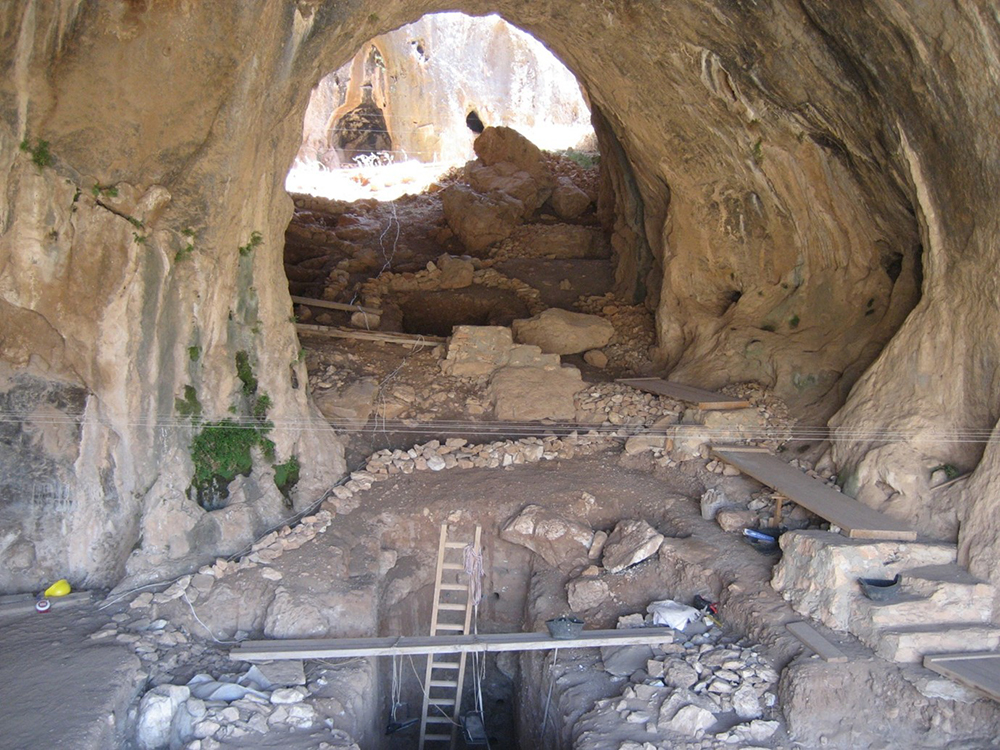
Neanderthals are the human species closest to our own, Homo sapiens, or “modern humans” as anthropologists call us. They lived in the same places and at the same time as us for a long time. Their skulls and bones have been found in what is now Germany and Syria. The relationship between them and modern humans is extremely complex, and our understanding of it has evolved with the progress of scientific research: this is particularly true of genetic studies of ancient bones and the increasing number of Neanderthal burial sites found around the world, especially in the Middle East and Europe.
First discoveries and naming
The first Neanderthal was discovered in 1856 in the small Feldhofer Cave in the Neander Valley near the city of Düsseldorf in Germany. The new human species was officially named after this valley, where the first known remains of this species were found: Homo neandertalensis. This literally means “Neanderthal man”.
At that time, a skull and bones were found that had features that differed from those of modern humans, such as a low forehead, prominent brow ridges and a strong jaw. Initially, it was assumed that these were modern humans who suffered from diseases that would have caused these strange features. However, later archaeological and anthropological research revealed that they were a separate species of extinct early humans. Today, there is a unique museum near the site of the discovery, the Neanderthal Museum (this is the 19th-century spelling), which is dedicated to researching this human species and its history.
Neanderthals roamed two continents
Neanderthals had strong bodies and pronounced muscles, broad skulls and powerful jaws, and slightly larger brains than modern humans. This helped them to hunt and survive in harsh environmental conditions, especially in cold and temperate regions. The excavations were mainly carried out in caves.
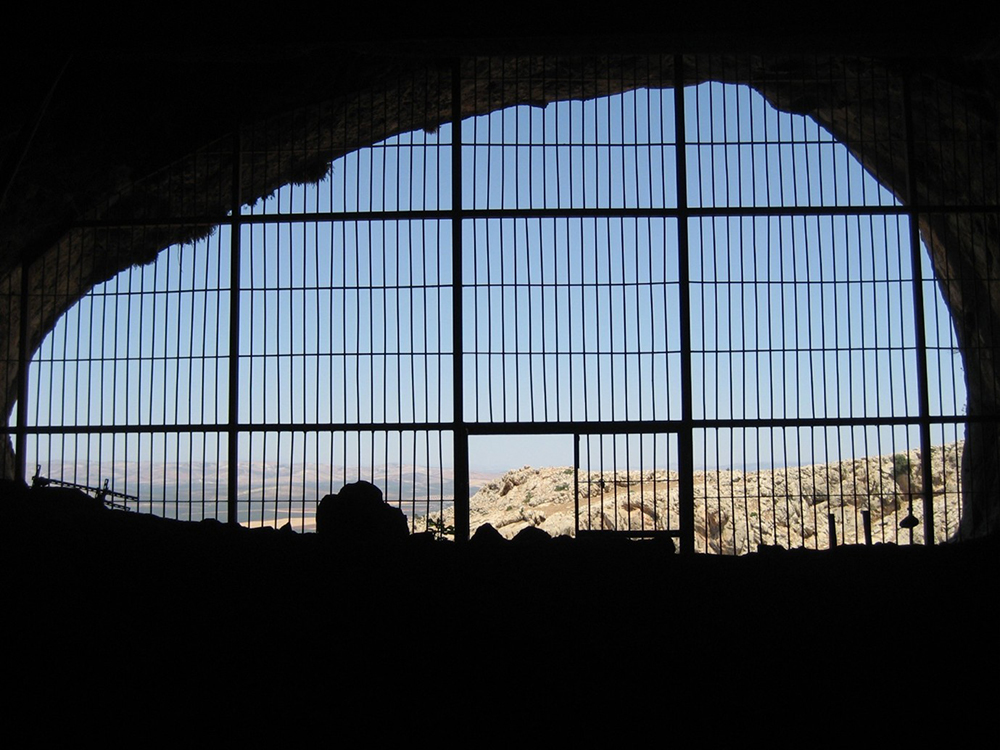
Neanderthals mainly populated Europe and the Middle East, and their remains have been found in Germany, France, Spain, Belgium, Italy, Ukraine, Russia, Syria, Lebanon, Israel and Iraq. In Germany alone, more than thirty sites associated with Neanderthals have been discovered, most of them in the limestone caves in the south of the country and in the Rhine Valley.
In Syria, their stone tools have been found in most regions, with the most important finds made in the Dederiyeh Cave near Aleppo, where the remains of three Neanderthal children were also found.
Neanderthals spread from Western Europe to the Middle East, making them a remarkable example of early humans’ ability to adapt to different environments. To date, however, no evidence of their presence in Africa has been found.
Neanderthals and modern humans: competition and interbreeding
The relationship between modern humans and Neanderthals has been unclear in the past, but advances in archaeological research, particularly in genetic research, have helped to further clarify this relationship.
It was previously believed that Neanderthals were not related to modern humans and that both had evolved in parallel and separately from a common ancestor with different habitats. However, recent research has revealed a more complex and multifaceted picture. Neanderthals lived in Europe and Western Asia between approximately 400,000 and 35,000 years ago, while Homo sapiens arrived from Africa around 70,000 years ago and spread first to Asia and then to Europe.
When Homo sapiens arrived on the European continent, Neanderthals had already been living there for tens of thousands of years and had adapted to the harsh cold. It is likely that the two species encountered each other in the Middle East and Europe, where they lived in close proximity to each other at times. This geographical proximity allowed for interbreeding between the two groups, as genetic studies have shown. In 2010, DNA analysis of Neanderthal bones showed that every non-African human carries between 1 and 3% Neanderthal genes. This means that the relationship between the two species was not limited to competition or conflict, but also included direct sexual contact, which has left traces in our genes to this day.
Therefore, Neanderthals are not considered direct ancestors of modern humans, but rather our closest extinct relatives. It can be said that we and the Neanderthals are cousins in the family tree of human evolution; we separated about 500,000 years ago and met again after each had changed in its own way.
Although Neanderthals were strong and well adapted to their environment, they seem to have lacked the cultural and cognitive abilities that enabled modern humans to survive and evolve by adapting to climate change.
Why did Neanderthals become extinct?
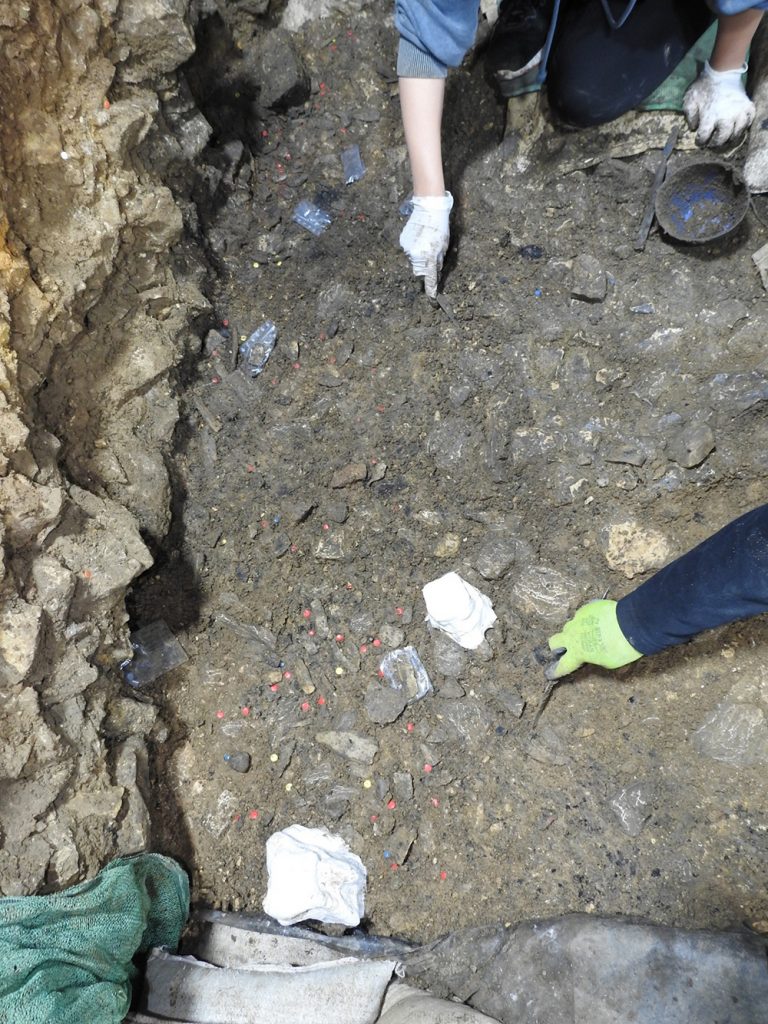
Archaeological finds suggest that Neanderthals disappeared around 35,000 years ago. The reason for their extinction remains controversial in science, as there is no clear answer, only a series of overlapping hypotheses.
One of the most well-known theories is that Neanderthals were unable to adapt to the sudden climate changes at the end of the Ice Age, when the environment became more unstable and difficult.
It is also possible that their small numbers compared to modern humans made them more vulnerable to extinction, particularly through gradual interbreeding, which led to their genetic assimilation into the modern human species.
Other theories suggest that competition from Homo sapiens—more numerous, innovative and better organised—played a decisive role in their disappearance from the archaeological record.
Similarities and cultural differences
In any case, Neanderthals were also intelligent beings in their own way. They used fire, made sophisticated stone tools and may have had a simple language and symbolic or religious sensibility. Some of their graves contained flowers or tools buried with the dead, suggesting primitive rituals or beliefs.
However, modern humans (Homo sapiens) were characterised by greater imagination, symbolism and long-term planning abilities. They were able to paint cave walls, make more effective hunting tools and communicate in a more complex language. These abilities gave them a significant cultural and cognitive advantage, enabling them to survive for generations and develop their culture, while Neanderthal culture remained local and limited, dependent on the availability of food and raw materials for tool making.
The caves of the Swabian Alb and understanding human species
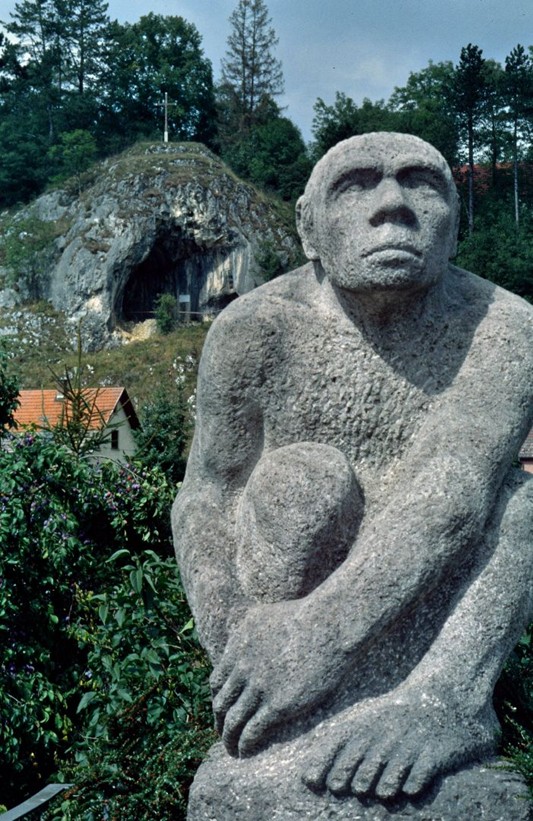
The University of Tübingen in Germany is one of the world’s leading centres for research into Neanderthals and early humans. Through its field and laboratory research in Syria and in the caves of the Swabian Alb in southern Germany, it has played a key role in discovering and researching the lives of Neanderthals in Europe.
Researchers at the university have studied fossils and tools of early humans from several famous German sites such as Hohlenstein-Stadel, Vogelherd and Hohle Fels. These caves are located in the Swabian Alb not far from Tübingen and are UNESCO World Heritage Sites due to their great importance for research into the origins of modern humans and symbolic art.
Remains of both Neanderthals and Homo sapiens have been found in the caves of the Swabian Alb, but they were never found in the same layer. It must therefore be assumed that there were no longer any Neanderthals in this region when modern humans arrived. However, the finds allow for a clear comparison between their cultures. Neanderthal tools were limited to stone tools and the use of bone and fire, suggesting a focus on survival, hunting and practical needs.
Homo sapiens, on the other hand, had more sophisticated tools and expressed themselves through art and symbols. In these caves, a statue of a “lion man”, a female figure and numerous naturalistic animal figures—all carved from mammoth ivory—were found, representing the oldest figurative art of humankind to date. In addition, there are musical instruments such as flutes made from bird bones or mammoth ivory, which are among the oldest known musical instruments in the world.
This cultural and intellectual contrast between Neanderthals and Homo sapiens is the key to understanding why modern humans survived and Neanderthals died out: creativity, symbolism and art were tools for survival as well as expressions of consciousness and imagination.
Further information can be found in the documentary film about the relationship between Neanderthals and us:
https://www.youtube.com/watch?v=gf1gR6UH72Y (German)
https://www.youtube.com/watch?v=HXwcav_2RpM (English)
https://www.youtube.com/watch?v=Z0ACD6pQ_mY (Arabic)
By Youssef Kanjou
tun25111701