

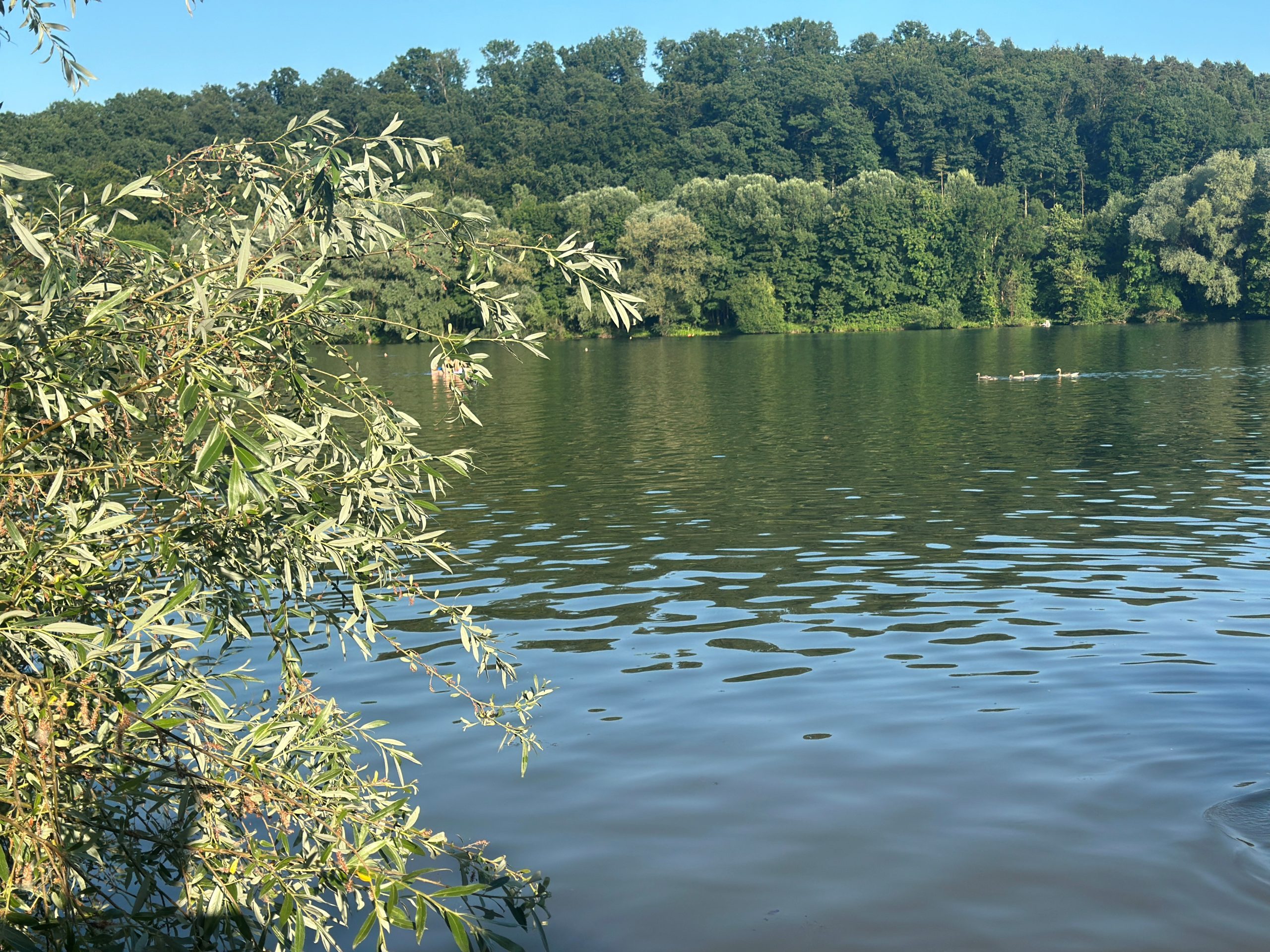
Swimming and splashing about are safest at outdoor swimming pools. There, lifeguards make sure that nobody goes under. What’s more, the water quality is constantly monitored. Nevertheless, many people prefer to go swimming in quarry lakes or play with their children in streams or rivers. It’s fun, but it can also be dangerous.
Swimming lakes: The quarry lakes in Kirchentellinsfurt and Hirschau are good places to swim. However, there are no lifeguards at either lake. The water is tested for pathogens by the public health authority once a month, or more frequently if necessary. The focus is on coliform bacteria, such as those found in the human gut. The results can be found – as for all other lakes in the state – on the Baden-Württemberg bathing water map:
https://badegewaesserkarte.landbw.de/
Inexperienced swimmers must be particularly careful at these lakes, as there are no designated non-swimmer areas. Sometimes the water drops off sharply into deep water just a short distance from the shore. Parents must therefore never let their children out of their sight. The DLRG warns that water wings and swim rings do not offer absolute safety. Even air mattresses can be dangerous if the wind blows them out into deep water.
If greenish streaks appear on the surface of a lake, it is best not to swim there: these could be blue-green algae, which can cause nausea and vomiting. In most cases, the local council will also put up signs warning against swimming.
Rivers: Although swimming in the Neckar is not prohibited in most places, the health authorities strongly advise against it. The Tübingen District Office points out that water quality in rivers is not monitored. Furthermore, there may be dangerous currents, and after heavy rain, driftwood sometimes floats in the water. Particularly when river levels are low, there is also a high risk of faecal bacteria being present in the water. This is because the proportion of water coming from sewage treatment plants is very high at such times. This can make you ill. Swimming near weirs is strictly prohibited – it is life-threatening. Most recently, swimmers complained of itchy blisters after swimming in the Neckar: they had come into contact with cercariae in the water – the larvae of flukes that burrow into the skin.
Even streams such as the Steinlach or the Ammer, where people often splash about, are not tested for water quality. For this reason, health authorities have advised against swimming in them for some time now. Some of the water in the Steinlach in Tübingen, for example, comes from the Dußlingen sewage treatment plant. There is also a sewage treatment plant on the Ammer near Gültstein. Furthermore, after heavy rain, pollutants from fields and meadows can be washed into the water. In any case, experts advise washing your hands thoroughly after playing in streams and rivers.
tun26072204