

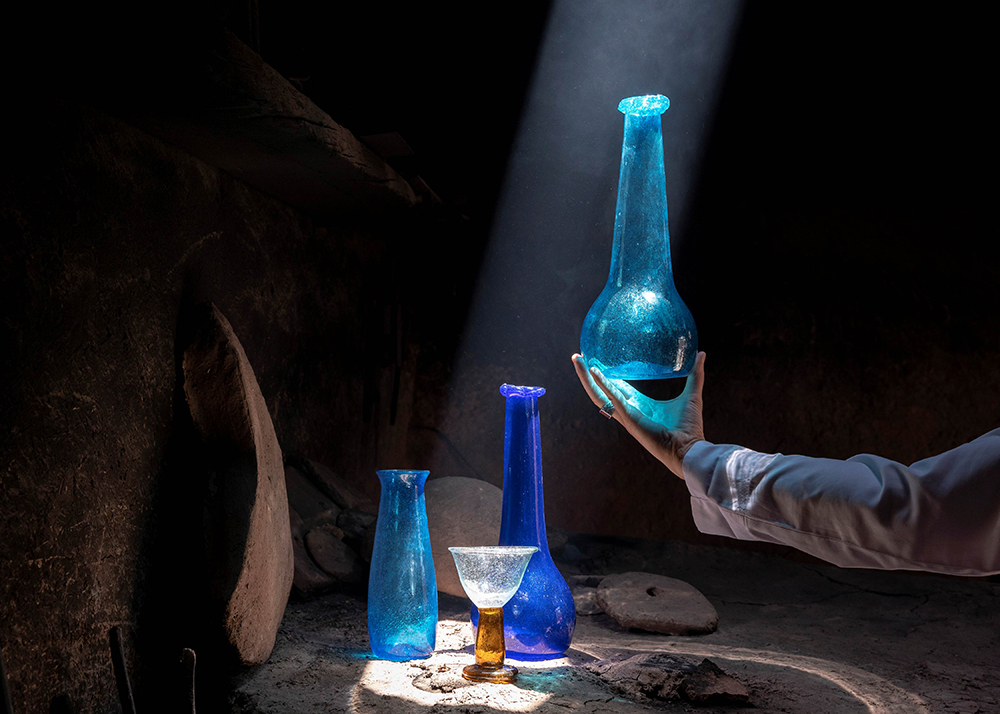
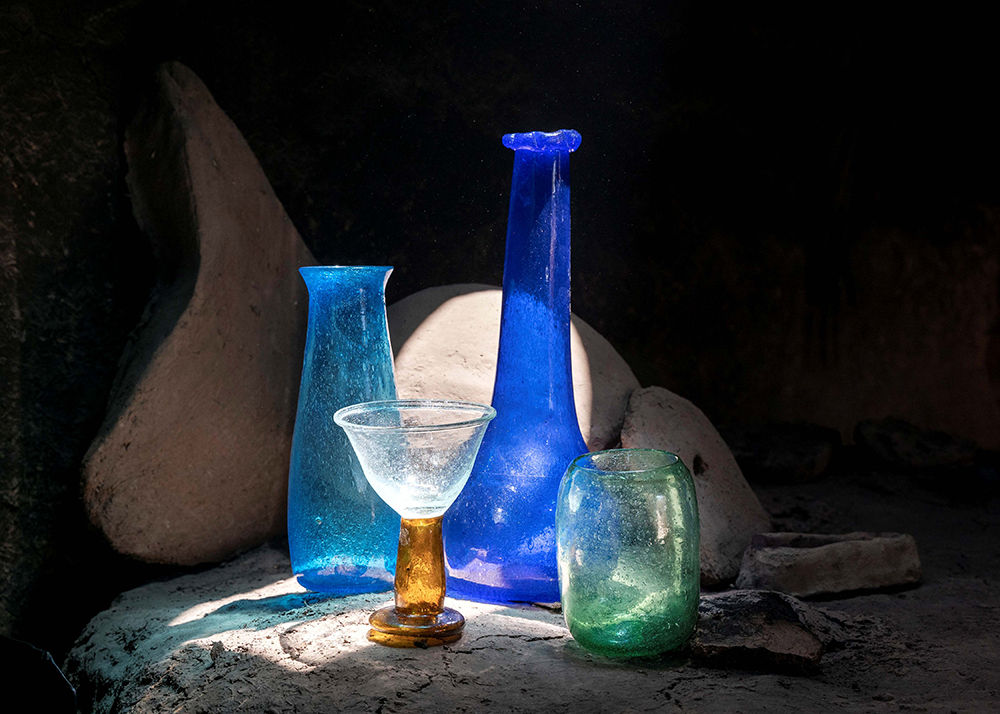
Afghanistan’s last glassblowers work in a narrow alleyway in the old town of Herat. It is nothing short of a miracle that their glasses, vases, carafes and bowls in dazzling shades of blue and green can now be purchased in Reutlingen and on German websites. Wolfgang Bauer made this possible. The Zeit reporter, who lives in Reutlingen, ensured that the furnaces did not go out even after the Taliban’s recent victory.
Wolfgang Bauer and the glass found each other on Chicken Street in Kabul. It was 2002, and the German reporter was visiting the Afghan capital for the first time. Naturally, he walked down the legendary street where hippies from the West had once bought their necklaces and carpets. “That’s where I saw the glass for the first time. Tea glasses, carafes, small glass vessels. They looked like diamonds in this city of dust. It was a haven of peace for the eye,” says Bauer. The reporter fell in love with glass art.
Glittering air bubbles
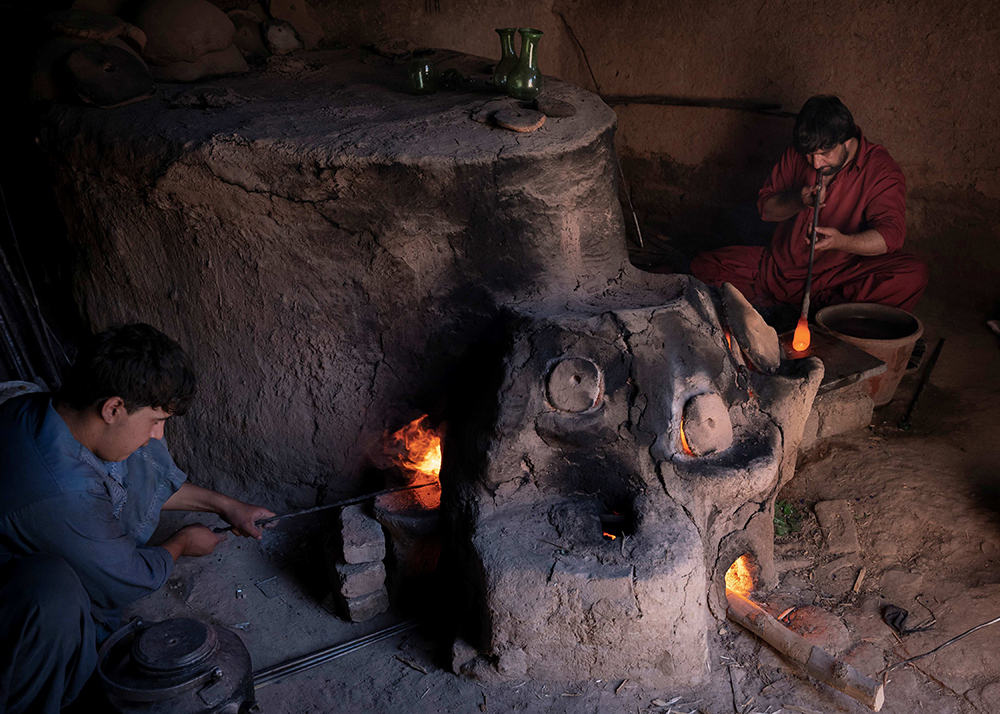
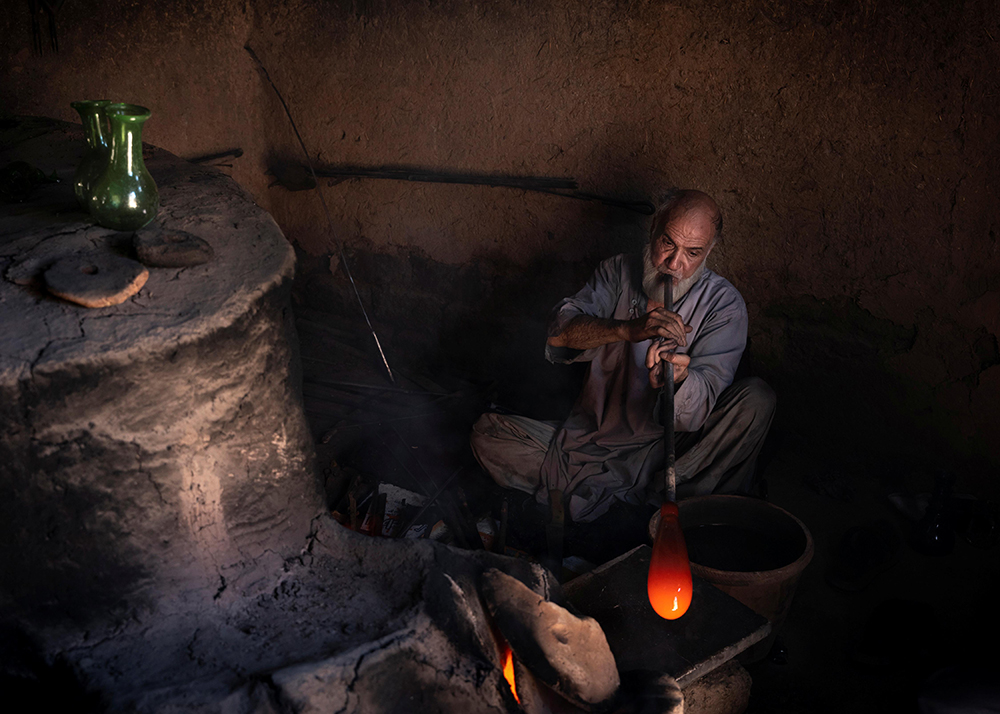
Bauer still remembers his first visit to the glassblowing family in the winding old town of Herat. There, they stoke the fire with wood, just like the generations before them. In their dark workshop, Nasrullah Faizi and his cousin Ghulam Sakhi heat a special sand in clay ovens until it becomes liquid. Using a metal tube, the glass pipe, they scoop up the mass and twist it until it forms a ball. Then Nasrullah or Ghulam blow air through the tube to form bowls, vases or glasses. Because the temperatures are lower than in industrial glass production, air pockets remain. These are what make their works of art so magical. They are the only ones in the whole country who still adhere to the centuries-old methods.
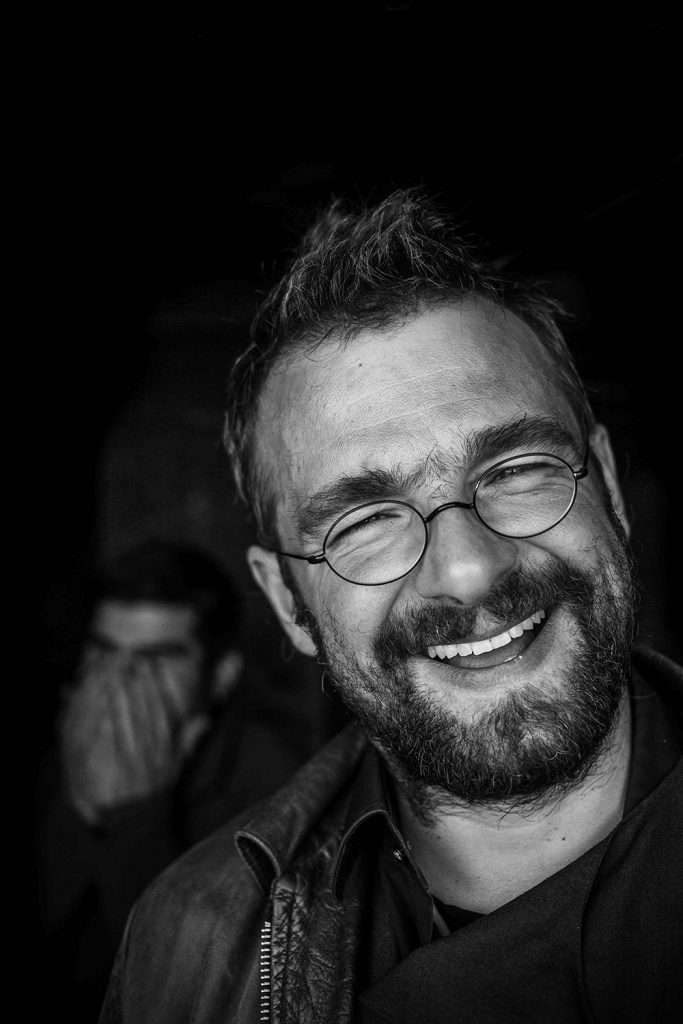
The journalist visited the glassblowing family time and again. Even when their existence was hanging in the balance after the return of the Taliban in 2021. Bauer was certain: “There are people in Germany who like glass.” In 2023, the first shipment arrived in Germany. To this day, some of the precious items are sold online, while others are sold through Schulz Teppich Etage in Reutlingen, whose senior manager himself has close ties to the country in the Hindu Kush. Dealers in Cologne and Berlin also offer the goods. The latest delivery—the result of five months of work—arrived in November: 40 metal crates, each measuring 80 by 160 centimetres and specially manufactured in Herat for transport. Wrapped in blister foil and paper, the vast majority of the precious goods survived the journey.
Chinese newspapers
Bauer packed his first vases and glasses in straw and took them with him on the plane to Germany. He also had a different kind of souvenir in his luggage: “I got fleas for a while,” says Bauer. Today, everything is done more professionally. “They use Chinese newspapers that they buy at the waste paper market,” says Bauer. That’s because Afghanistan under the Taliban is virtually paper-free. The goods are transported in crates on the long journey to Germany: by rickshaw from the old town of Herat to an old German coach that serves as a truck. It takes two days to reach Kandahar, then the goods are delivered to a cargo company before being loaded onto a plane and taken to Dubai. From there, they continue on to Frankfurt. Cargo City South is the final stop before distribution begins. Bauer has delegated the paperwork to the importers.
The first apprentices
What began as a small private project has now become of existential importance for the glassblowing family. “We are their biggest customers,” says Wolfgang Bauer, who makes it clear that he does not earn a penny from importing the glass. With the proceeds from the third delivery, the family can train apprentices for the first time. Nasrullah Faizi and Ghulam Sakhi told their patron that their glass used to be something like the Sunday tableware of the Afghan upper class. But that is long gone. Before the Taliban came hippies, then other travellers, later NGOs and soldiers, who stocked up on the glittering souvenirs in Kabul. When the Taliban came back to power in 2021, no one came anymore. The glassblowing family was threatened with extinction.
Glassblowers as hairdressers
Bauer also witnessed the darkest period for the glassblowing family. When he returned to Afghanistan in 2021 to write his book about the Ring Road, everything seemed lost for the glassblowing family. “Their furnaces had gone cold for the first time,” says Bauer. The traders no longer take any new goods from them. And since the traders had always presented themselves to their customers as glassblowers in order to conceal their source of supply, no one knew where the actual glass artists were based. In their desperation, they are already thinking about emigrating and have already made contacts as far away as Krakow. Until then, they are trying to keep their heads above water with a hairdressing salon. It is not only the new rulers who are making life difficult for the glassblowers; industrial glass from China and Iran has also destroyed their markets. Added to this was the severe earthquake in 2023, which also damaged their workshop.
Then hope returned, and the glassblowers returned to their furnaces. During his recent visit to Afghanistan, Wolfgang Bauer brought producers and dealers in Germany together, at least virtually. Videos he recorded in the glassblower’s workshop found their way to dealers in Germany via messenger service. Thanks to Bauer’s translator, they were also able to talk to each other. And on Facebook, Wolfgang Bauer shows a video of himself trying his hand at glassblowing.
Information and stories
The invention of glassblowing is attributed to the Phoenicians, who developed the technique in the first century BC. But the Mesopotamians are said to have produced glass beads as early as the third millennium BC.
Youssef Kanjou and Abdul Baset Kannawi have written an article about this on tuenews (tun25072906).
In 2023, Wolfgang Bauer published a touching report on the life of the glassblower family for Zeit magazine:
ZEIT – Explosions in glass
The Afghan glass is sold here:
https://www.schulz-teppich-etage.de
https://ok-international.com
By Brigitte Gisel
tun25120201