

By Youssef Kanjou and Abdul Baset Kannawi
Glass has always fascinated people. Its manufacture was probably discovered by chance. The Middle East played a key role in this. The Phoenicians brought glass products to Europe.
The beginnings of glass production
In prehistoric times, people used a natural stone called volcanic glass or obsidian, a glass-like material, to make sharp tools, jewellery and mirrors. This shiny black stone was rare and was transported over long distances. Later, craftsmen in the Middle East succeeded in imitating nature and producing glass using their own methods.
Some ancient sources, such as Pliny the Elder in the 1st century AD, report that the discovery of glass occurred by chance on the coast when sailors placed their metal pots on the sand and used blocks of natron (sodium carbonate) to stabilise their cooking pots. The sand melted under the heat with the soda and formed a shiny, transparent material.
Centuries earlier, around 1500 BC, Egyptian craftsmen had developed a method for making glass vessels, and the first references to glassmaking appeared on Assyrian stone tablets around 650 BC.
The Phoenicians as glass pioneers
The Phoenicians are credited with developing the glass industry and spreading its use. They were inhabitants of coastal cities in the Middle East, such as Tyros, Sidon and Arwad, and were among the first to master the art of melting and colouring sand. They used copper to produce blue, iron for green and manganese to eliminate cloudiness. In the first century BC, they invented the technique of glass blowing, which made production faster and cheaper and spread glass throughout the Mediterranean region.
Phoenician glass was not only a household item but also a delicate work of art: beads, perfume bottles, amulets and coloured gemstones used for decoration and rituals. These products reached as far as Egypt, Greece and Rome, testifying to the extensive trade networks that connected the Phoenicians to the ancient world. Phoenician glass can be seen as one of the earliest symbols of ancient globalisation: a transparent material that carried traditions and cultures from one sea to another.
From the Romans to the Byzantines
As the Roman Empire expanded, the Romans adopted Phoenician glassblowing techniques and transformed glass from a luxury item into an everyday product. They established workshops throughout the empire, from Alexandria to Rome and even on the banks of the Rhine. Glass was used for windows, vessels, lamps and the decoration of palaces and temples, while its Eastern character remained clearly recognisable in its colours, marine motifs and precision craftsmanship.
With the division of the empire and the rise of Constantinople, glass entered a new phase in the Byzantine era, becoming associated with religious art. The churches in present-day Istanbul still bear witness to this splendour with their gilded mosaics. The small pieces of glass reflect the light as if they were fragments of the sky.
The Islamic era
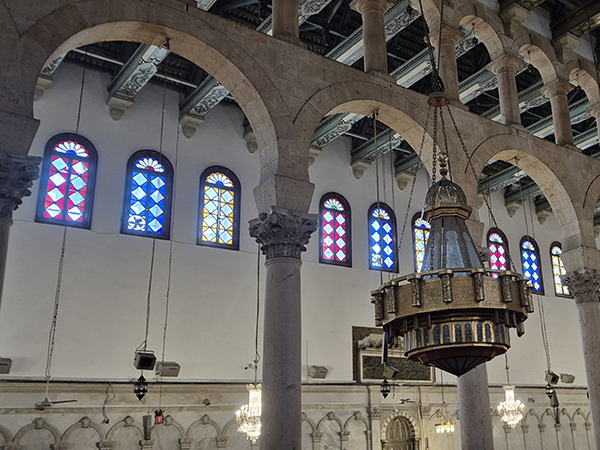
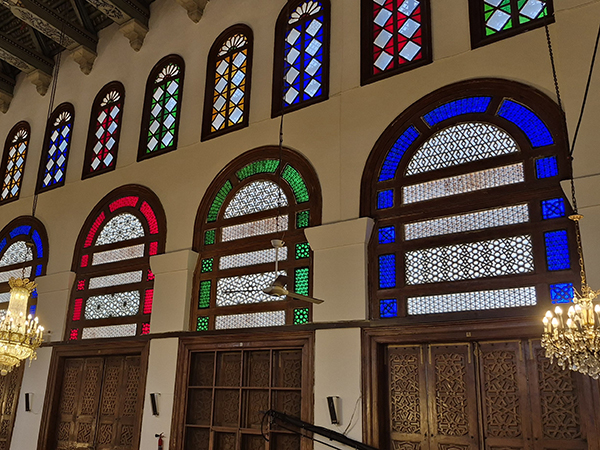
The Islamic era breathed new life into glass. In Damascus, Fustat and Basra, glass was not only a continuation of old traditions, but also the birth of a new art form that combined geometry and abstraction. In the 13th century, the technique of enamelling and gilding vessels appeared in Damascus, turning glass into a canvas on which texts in Kufi and Naskh script were written and decorated with dazzling floral motifs.
In Syrian cities such as Armanaz and Damascus, there are still traditional glassworks that preserve the ancient methods of hand-blowing and dyeing that have been developed over centuries of creativity. In 2023, UNESCO added Syrian glassmaking to its list of cultural assets in urgent need of protection as an element of intangible cultural heritage:
unesco.org – traditional-syrian-glassblowing
Glass in Europe and the Renaissance
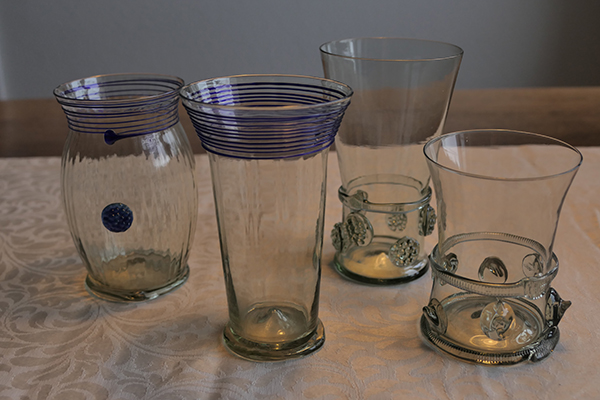
In medieval Europe, the types of glass varied depending on the environment. In the north, “forest glass” made from wood ash was widespread, while in the south, soda glass was preferred. In the 14th century, the island of Murano in Venice gained importance, and its transparent glass became a symbol of luxury. The secrets of its production were guarded like military secrets.
In southern Germany, the Black Forest was a centre of glass production, which began there 800 years ago. Today, there are still glassworks in Alpirsbach (Freudenstadt district) and Wolfach in the Kinzig Valley, for example. In the Dorotheenhütte there, a museum offers a tour through 2000 years of glass history:
Dorotheenhütte – Become a glassmaker yourself
Machines and innovations
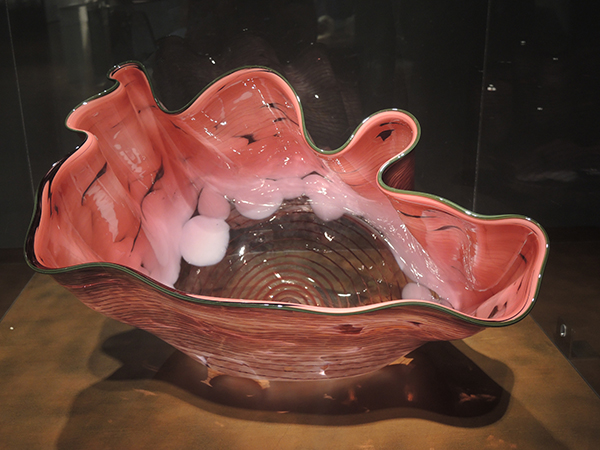
During the Industrial Revolution, glass underwent another change when lead oxide was added to the melt, increasing its transparency and brilliance. Great Britain and Germany were leaders in innovations in crystal and flat glass production. The 19th century saw the advent of machines capable of producing thousands of bottles per hour, and the mid-20th century saw the introduction of float glass technology, which produced more uniform and clearer surfaces, paving the way for glass skyscrapers and modern screens.
In fact, the history of glass is the history of humanity in its quest for innovation and craftsmanship. From volcanic rock to modern chemistry laboratories, glass has remained a transparent witness to humanity’s ability to transform nature into beauty. It is not just a material, but a visual language that expresses the spirit of every era, as ancient temples, mosques, churches and modern city buildings alike prove.
Further information can be found at:
planet-wissen.de – Glass as a material
youtube.com – Syrian glassblowing (Arabic)
youtube.com – Armanaz, glass manufacturing (English)
tun25072906