

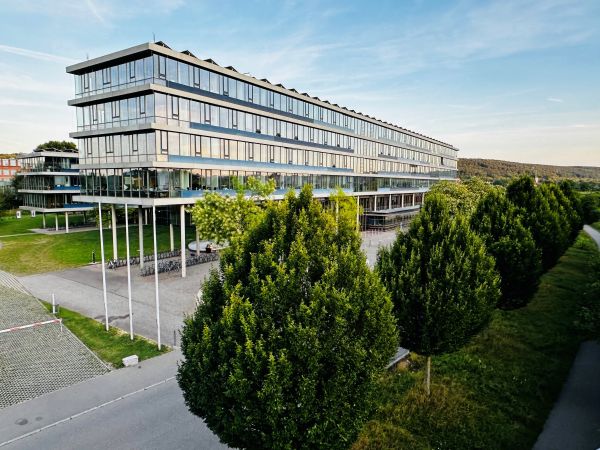
Some parents cringe at the mention of the Youth Welfare Office. Isn’t that the authority that takes children away from their parents? No, says Katrin Fehrle, head of the Youth Department at the Tübingen District Office. “We help people to help themselves.” The main task of the Youth Welfare Office is therefore to support parents in raising their children. Especially when things get difficult—for example, when children skip school or are caught fare dodging several times. The Youth Welfare Office also helps when there are problems within the family, for example because the parents no longer get along well or, in the worst case, they hit their children or harm their psyche. However, Fehrle says that it is only in very rare cases that children are separated from their families. And even then, the decision is not made by a youth welfare office employee, but by the family court.
Advice for all parents
Refugee families also often have an uneasy feeling about the authorities because they are unfamiliar with the youth welfare office. That is why the district office has a specialised service that looks after unaccompanied minor refugees and refugee families. First of all, however, there are free counselling services for all families, regardless of their origin, at three youth and family counselling centres in the district: in Tübingen, Mössingen and Rottenburg. Further information and contact details can be found on the homepage:
https://www.kreis-tuebingen.de/soziales/jugend/jfbz
“It is the parents’ responsibility to raise their children,” says Fehrle. The youth welfare office gets involved in two situations: Firstly, when the parents themselves say that they are overwhelmed by the situation and turn to the youth welfare office. Then an application for youth welfare is made and the experts work with the parents to determine how they can best help: parenting advice or groups for children and young people, perhaps also social-educational family assistance, where a person comes into the family and tries to solve the problems together. If the situation does not improve, children can be placed in foster families for a period of time or young people can move into shared accommodation. However, the parents retain custody in all cases. “Our goal is to support people who need help before the situation escalates,” says Fehrle. According to the department head, decisions are not made by individual employees, but by the team.
The welfare of the child is paramount
On the other hand, the youth welfare office also takes action if it receives a report that the welfare of a child is at risk. “Then we have to investigate,” says Fehrle. Reports can come from neighbours, educators or teachers who have the impression that children are being beaten or otherwise abused at home. “If the parents cooperate, we work with them,” says Fehrle. She gives an example: in one family, the father is violent and beats the children. “If the mother agrees, we make sure that the father moves out,” says the head of the agency. However, if the parents do not want to cooperate with the agency, the family court gets involved. Judges then decide whether the danger to the child is so great that it must leave the family. “The decision is then made by the court,” says Fehrle.
Refugees have specific questions
Refugee families do not have more problems than others, says the youth welfare office director, but they sometimes face special difficulties. As the experts at the youth welfare office know, there are occasionally different ideas about parenting. “But German law applies in Germany,” says Fehrle. This means, for example, that parents are not allowed to hit their children. And even if compulsory schooling ends after the fifth grade in their home country, this is not the case in Germany. Neither for boys nor for girls. In Baden-Württemberg, children and young people must attend full-time school for nine years. This is followed by compulsory vocational schooling until the age of 18.
tun25110505