

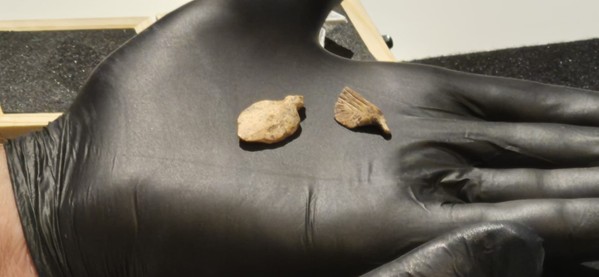
Tiny bird figurines carved from mammoth ivory—which, at 40,000 years old, are among the oldest figurative works of art in the world—are now on display at the Museum of Prehistory and Ice Age Art in Blaubeuren. A team of archaeologists from the University of Tübingen just presented these two spectacular new finds at a press conference on July 29, 2026. They were excavated in the nearby UNESCO World Heritage cave and, at about two centimeters in length, are the smallest Ice Age artworks discovered to date in the caves of the Swabian Alb.
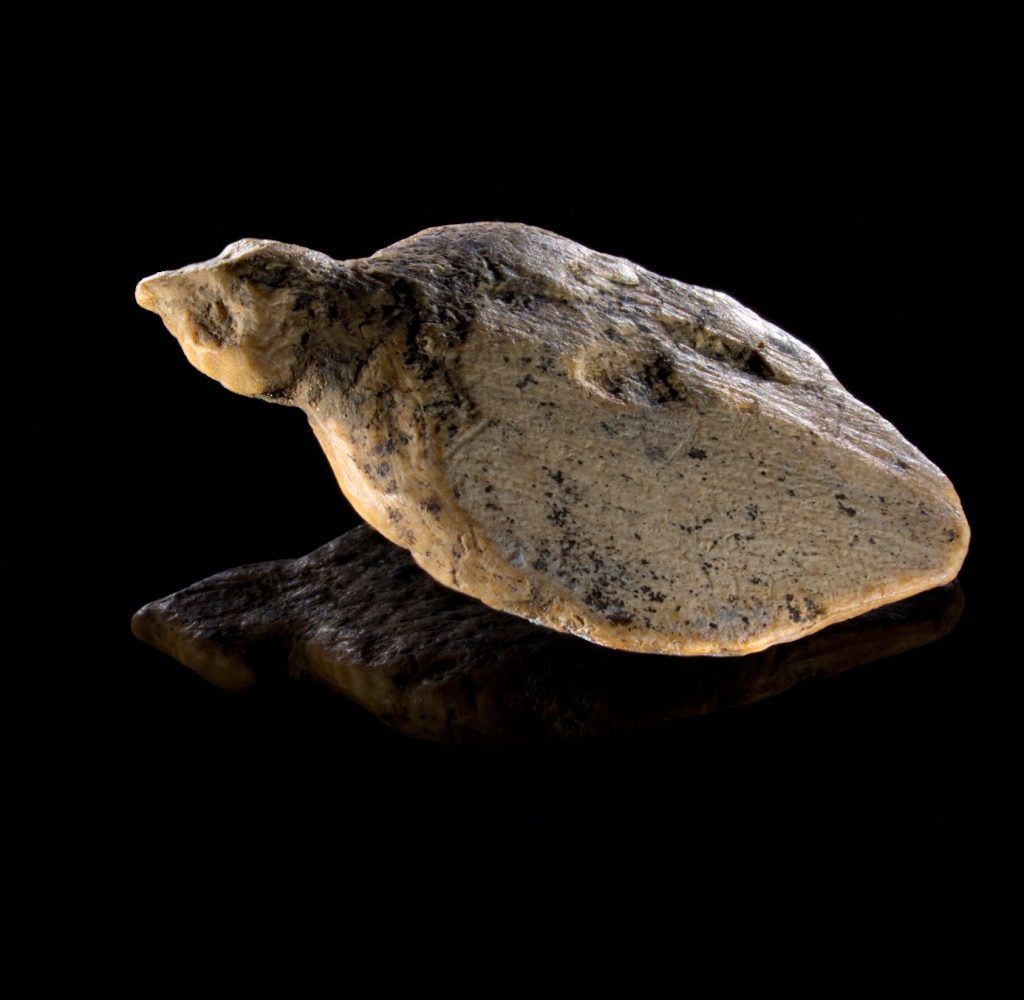
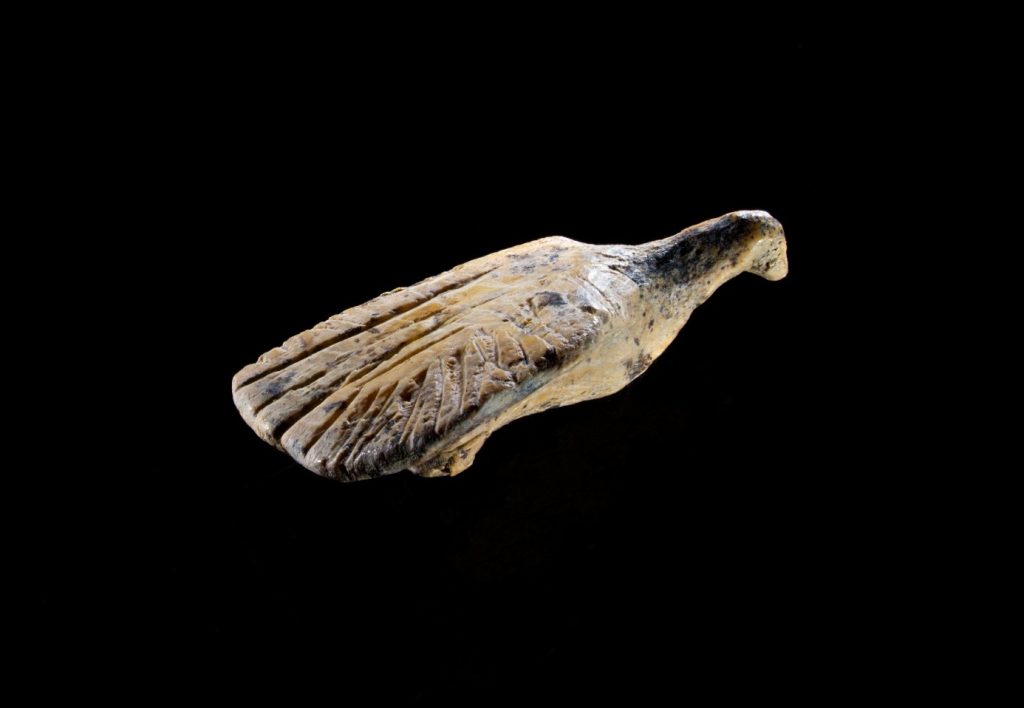
One depicts a rounded, resting—and possibly nesting—bird that could be interpreted as a ptarmigan, and the other shows a bird with outstretched wings that could be depicted in flight, landing, or courting. Despite their small size, the birds are exceptionally carefully crafted: The resting bird has striking round eyes, while the other bird has a distinctive beak and parallel markings on its wings that depict the bird’s plumage.
Unearthed in a cave in the Swabian Alb
All of these works of art unearthed in the caves—mostly animal figures, but also two depictions of women and several hybrid creatures such as “lion-men”—were created by nomadic hunters and gatherers who, like modern humans, belonged to the species “Homo sapiens.” They had migrated from Africa via the Near East to Central Europe along the Danube some 45,000 years ago and evidently lived in the caves of the Swabian Alb for an extended period.
Talisman, Group Symbol, or Shaman’s Companion
“Weighing just under 1.3 and 0.7 grams, the two newly discovered ivory birds are true lightweights,” says Prof. Nicholas Conard, the lead excavation director, “but they raise many exciting scientific questions for us.” He pointed out that they could possibly be interpreted as individual talismans or as group symbols that fostered a sense of identity. It also remains unclear why the people at Hohle Fels near Schelklingen in the Achtal Valley were so preoccupied with birds 40,000 years ago.
With a waterbird excavated there a few years ago, this cave now boasts three depictions of birds, whereas such depictions are entirely absent at other sites. At those other sites, imposing animal figures such as mammoths, cave lions, or wild horses predominate. There may be connections to the world’s first musical instruments—made from bird bones—also discovered in this cave, or to the shamanic depictions of lion-men. According to ethnological findings, shamans are often accompanied by waterfowl on their journeys into other realms because, like these birds, they can fly, swim, and dive.
Further information:
Press release from the University of Tübingen: Two Bird Figures Named “Discovery of the Year” from the UNESCO World Heritage Cave Hohle Fels | University of Tübingen
Statement by Prof. Conard on SWR: 40,000 Years Old: Researchers Find Stone Age Bird Figures – SWR Aktuell
tuenews INTERNATIONAL on the oldest musical instruments: Oldest Music: Instrument Finds in Southern Germany and Evidence of Songs in Syria – tuenews
tun26073001