


Heat, drought, water scarcity—the consequences of climate change are impossible to ignore. Experts at the Rottenburg University of Forestry (Tübingen district) are convinced that trees and forests can help. “We don’t want the forest to merely survive somehow. Rather, we want the forest to retain its functions for people—as a natural and recreational space, a source of wood, erosion control, and a water reservoir,” says the president of the Rottenburg University of Forestry, Prof. Bastian Kaiser, in an interview with tuenews INTERNATIONAL. And to achieve this, we must help the forest, he adds, because it cannot do so on its own. The pace of climate change is far too rapid for that. Central Europe is the region warming the fastest, Kaiser adds.

Oak and Lebanese cedar
Trees and forests are crucial for slowing climate change. That is why the Rottenburg University of Forestry is participating in research projects on the “Forest of the Future” concept. Prof. Kaiser is certain that the forest of the future will look different. Some tree species will be displaced, such as beech and spruce, which cannot cope with the drought and heat. Others, such as maple or oak, will be planted more frequently. They are more resilient.
Foresters have already begun this transition. Non-native species, such as the Douglas fir from North America and conifers from the Mediterranean region like the Lebanese cedar, are also gaining importance.
“We can learn from others,” says Kaiser, emphasizing the importance of collaboration with colleagues. Until now, they have come to Germany to learn about sustainable forest management. Now German forestry experts are traveling to the Middle East to learn about the local tree species there that are heat-resistant and can survive on little water.
Whether these will also grow here remains to be seen, says Kaiser. Frost and cold are major concerns. Trials are currently underway on larger areas.
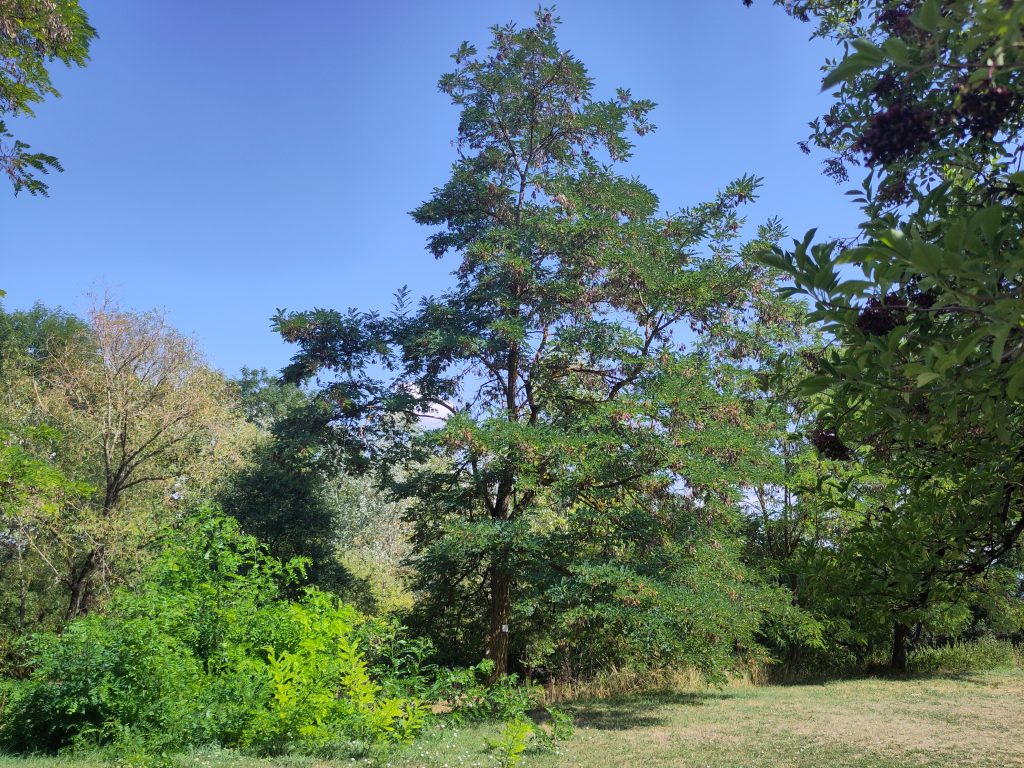
Experiments in Reforestation
We’ve actually made progress in this area before. Even in Rottenburg, people were already exploring the forest as a water reservoir decades ago. But due to a lack of interest from politicians and the general public, the experiments were discontinued. At any rate, district foresters in southern Germany have been experimenting with reforestation on smaller plots for quite some time to determine which tree species thrive best on different soil types. Since this work must now be documented, scientists can evaluate the results. Prof. Kaiser is confident that they will find suitable tree species for the forest of the future.
Trees in the City
Another topic the Rottenburg forestry experts are addressing is the importance of trees for urban life. People are suffering from extreme heat, which builds up between buildings. The air can barely cool down at night. We need to stop soil sealing and create more green spaces and open bodies of water, Kaiser urges. This would ensure a more pleasant microclimate. And we should connect existing green spaces: “Why not divert part of the access road into the city to make way for a row of trees, or plant the median strips?” Often, shrubs are enough. They store water and provide cooling through evaporation.

A so-called “tiny forest,” or mini-forest, will soon be planted in Tübingen. The forestry school in Rottenburg plans to study its effects. In Heilbronn, they’ve already had very positive results.
Such parks and mini-forests are also very important because they prevent water from running off immediately, which can lead to flooding during heavy rains, Kaiser points out. The goal for the future is to keep water in the regional cycle for as long as possible—a good remedy for prolonged dry spells.
Initiative is needed
Greening buildings is another way to combat the rising heat. Roof surfaces are already being used, and facades are also well-suited, says forestry expert Kaiser. Rock gardens should definitely be avoided. Ideally, they should be banned, demands the president of Rottenburg University of Applied Sciences. Every single person can do something: “Every little bit helps.” He cites a positive example from Venezuela, where he worked for many years. There, school classes took care of the trees in the village square. Kaiser hopes to see a similar sponsorship program for the outdoor areas of a new school gym in Rottenburg: “This isn’t just about improving the quality of life, but also about the climate.”
Further information:
https://www.hs-rottenburg.net/forschung/projekte-schwerpunkte/forst-und-holzwirtschaft/
https://www.zdfheute.de/wissen/hitzewelle-hitzetote-deutschland-rki-statistik-100.html
https://www.zdfheute.de/panorama/deutschland-duerre-karte-duerremonitor-trockenheit-niederschlag-klima-100.html
https://www.swr.de/swraktuell/baden-wuerttemberg/karlsruhe/douglasien-zapfen-ernte-hitze-wald-100.html
https://tuenews.de/hitze-und-trockenheit-westeuropa-erlebt-rekord-juni/
https://tuenews.de/wasserentnahme-im-kreis-tuebingen-teils-verboten/
tun26080507