

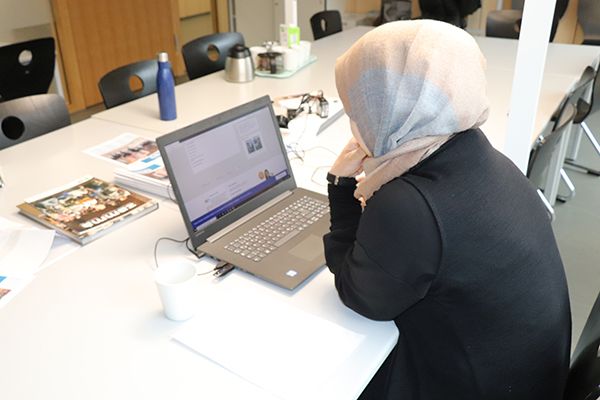
Employees with a migrant background earn less on average in Germany than employees without a migrant background. At the same time, women earn less from employment than men. When these two factors overlap, inequality can become even more pronounced. This is what the term “Gender & Migration Gaps” describes: differences in employment, working hours and income that are linked to both gender and migrant background.
Migrants Earn Less
Citing an international study published in the journal Nature, Mediendienst Integration reports that first-generation migrants in Germany earn an average of 19.6 per cent less than people without a migrant background. Among the second generation, the gap is considerably smaller but still amounts to 7.7 per cent.
Around three quarters of the gap can be attributed not to unequal pay for the same work, but to migrants’ more limited access to well-paid occupations, sectors and employers. The migrant pay gap therefore cannot be explained solely by wage differences within the same company.
The Gender Gap in the Labour Market
According to the Federal Statistical Office (Destatis), the gender gap in the labour market remained at 37 per cent in 2025. The indicator takes three factors into account: differences in gross hourly earnings, the number of paid working hours and the labour market participation of women and men.
Women are more likely to work part-time and less likely to be employed than men. Many care for children or relatives. Economic inequality between women and men therefore extends far beyond differences in hourly pay.
Differences Among Men
Income differences linked to migrant background are also evident among men. According to analyses by the Federal Foundation for Gender Equality, the average hourly wage of men with a migrant background is just under 5 per cent lower than that of men without a migrant background. The difference in monthly earnings from employment is around 11 per cent.
Unequal access to well-paid occupations and employers, as well as discrimination, may be among the factors contributing to this gap.
Differences Among Women
Women without a migrant background also earn less than men in the same group. However, women with a migrant background have even lower incomes. The interaction between gender and migrant background can therefore further deepen inequality in the labour market.
According to the Federal Foundation for Gender Equality, the largest income gap is between men without a migrant background and women with a migrant background. Depending on the group, the gap ranges from 16 to 41 per cent in hourly pay and from 33 to 68 per cent in monthly earnings from employment.
Employment and Working Hours
According to the Federal Foundation for Gender Equality, people who have immigrated to Germany from another country are less likely to be employed than people without a migrant background. Among 18- to 64-year-olds, the employment rate was 89.3 per cent for people without a migrant background, compared with 60.5 per cent for immigrants. Among refugees from countries other than Ukraine, the rate was 53.9 per cent, while among refugees from Ukraine it was 32.1 per cent. These calculations are based on survey data from 2023.
However, a more recent study shows that employment among Ukrainians who came to Germany following Russia’s full-scale invasion of Ukraine has increased significantly. According to the Federal Institute for Population Research (BiB), the employment rate among Ukrainians aged 20 to 64 who arrived in Germany between February and May 2022 stood at 51 per cent in early summer 2025. The rate was 50 per cent among women and 57 per cent among men.
In all groups studied, women were less likely to be employed than men. The difference was particularly pronounced in full-time employment. Among people without a migrant background, immigrants overall and refugees from Ukraine, the proportion of women working full-time was about half as high as the corresponding proportion of men. Among other groups of refugees, the proportion of women in full-time employment was only about one fifth of the corresponding proportion of men.
Multiple Barriers for Women
The situation of women with a migrant background is shaped by both gender-specific and migration-related factors. Entering the labour market can be particularly difficult for refugee women. Their opportunities are often limited by care responsibilities, language barriers, difficulties in having foreign qualifications recognised and restricted access to professional networks. As a result, many are unable to work immediately in the occupation for which they were trained.
Multiple Factors Reinforce Inequality
The Federal Foundation for Gender Equality emphasises that different forms of disadvantage do not operate independently of one another but can overlap and reinforce each other.
An intersectional approach makes it possible to compare the situations of different groups, such as women and men with and without a migrant background. The foundation also concludes that these different forms of inequality require targeted measures that take full account of the circumstances of migrant and refugee women.
Sources:
Mediendienst Integration: Migrant Pay Gap – citing a study published in the journal Nature
Federal Foundation for Gender Equality: Factsheet on Gender Migration Gaps
Destatis: Gender Gap in the Labour Market 2025
Bundesinstitut für Bevölkerungsforschung (BiB): Drei Jahre nach Ankunft – Etwas mehr als die Hälfte der Ukrainerinnen und Ukrainer ist erwerbstätig
tun26080504