

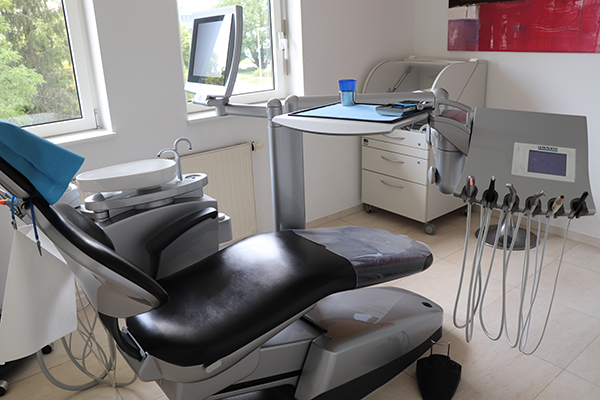
Some children are so terrified of the dentist that they can only be treated under general anaesthesia. In many cases, the statutory health insurance covers the costs – but not always. tuenews INTERNATIONAL asked the Baden-Württemberg Association of Statutory Health Insurance Dentists (KZV BW) for clarification.
General anaesthesia: a last resort
Accordingly, statutory health insurance funds cover the costs of general anaesthesia for children if no other form of pain relief – such as an injection – is possible during dental treatment. According to the German Dental Association, general anaesthesia is generally not the first choice in dentistry. Other methods, such as local anaesthesia or gentler procedures, should be considered first. General anaesthesia is primarily used when comprehensive treatment is required in a single session or when other procedures are insufficient.
The German Dental Association refers to clearly defined medical criteria: general anaesthesia may be necessary, particularly for children under 12 years of age if they are unable to cooperate sufficiently, as well as for patients with intellectual disabilities or severe motor impairments. It may also be used under certain conditions in cases of severe anxiety disorders or where medical reasons preclude the use of local anaesthesia.
In such cases, a careful assessment is always made between the risks of anaesthesia and the potential consequences if necessary treatment cannot be carried out, or can only be carried out under significant stress.
Among statutory health insurance providers, for example, the Techniker Krankenkasse points out that parents must pay the costs of general anaesthesia themselves if the medical criteria are not met.
Who decides on the anaesthesia?
The decision on whether general anaesthesia is necessary is initially made by the dentist. However, the final responsibility lies with the anaesthetist, who assesses the patient’s suitability for anaesthesia and supervises the procedure.
What are the risks?
According to the German Society for Anaesthesiology and Intensive Care Medicine, anaesthesia in Germany is generally considered safe, as it is administered in accordance with high medical standards.
Further information:
www.bzaek.de/service/positionen-statements/
www.dgai.de/aktuelles-patientinnen-projekte/pressemitteilungen/
www.dgai.de/aktuelles-patientinnen-projekte/pressemitteilungen/96-pressearchiv-2023/
www.tk.de/techniker/versicherung/tk-leistungen/zaehne/zahnbehandlungen/
tun26040705