

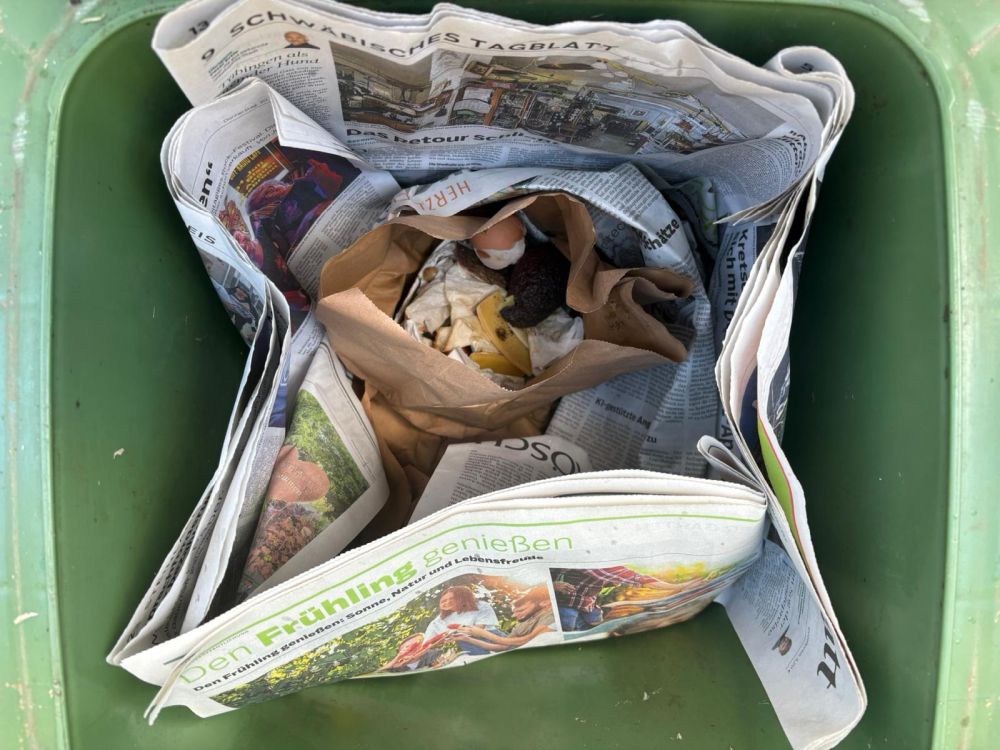
Organic waste is valuable. After fermentation, it is used as fertiliser. That is why the bin must not contain any harmful substances, such as plastic. Many districts have banned so-called biodegradable plastic bags since 2026. The situation is different in the district of Tübingen. However, only bags bearing the DIN number EN 13432 or the seedling logo are permitted.
The district of Tübingen has launched a campaign to improve organic waste management. The information campaign runs under the slogan “Make your organic waste bin happy”. It explains why organic waste is valuable and how it should be wrapped – in newspaper or paper bags, for example from the baker, butcher or for fruit – but only without a plastic window.
Bins containing contaminants remain uncollected
So-called contaminants such as plastic, aluminium bags, metal and glass repeatedly end up in organic waste bins. These materials cannot be completely sorted out. That is why organic waste bins with red warning labels are often left by the roadside in the district of Tübingen – see the report numbered tun25042909
Incorrectly filled bins are not emptied. Recycling would be more costly. This could lead to an increase in waste collection charges. Households must therefore sort the harmful materials out of their bins or have the bin emptied as residual waste for a fee of 20 euros using a special label.
Further information:
https://www.abfall-kreis-tuebingen.de/mach-deine-biotonne-gluecklich-2/
tun26050602