

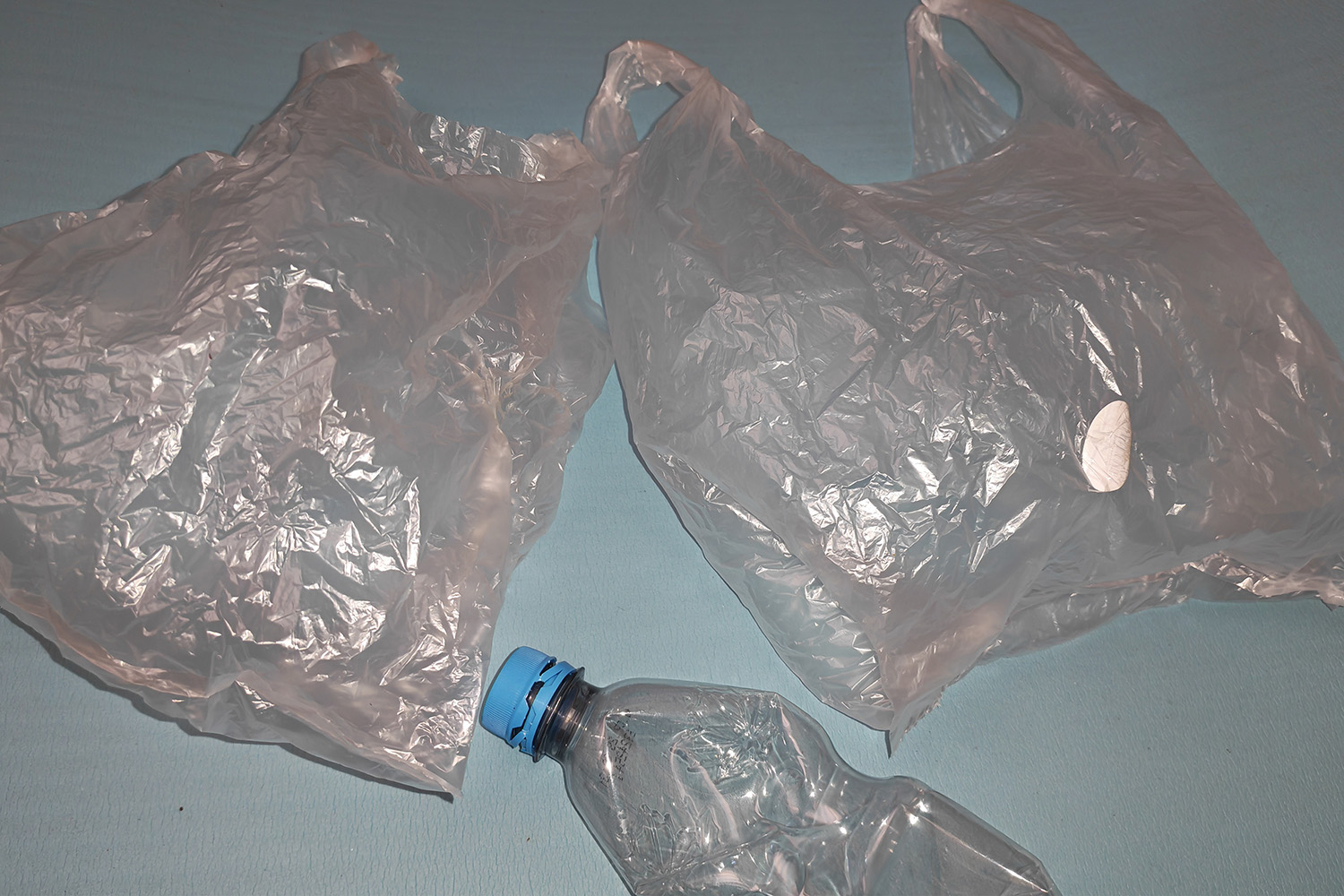
Microplastics can now be found almost everywhere: in the air, in the soil, in food, in Arctic sea ice and even in deep-sea trenches. Many people are therefore concerned about their health. However, based on current knowledge, experts at the Federal Institute for Risk Assessment (BfR) currently consider the risk to consumers to be relatively low. This is reported by Stiftung Warentest in an overview of the research.
How microplastics enter the body
In many studies, microplastics are defined as plastic particles ranging in size from around one micrometre to five millimetres. People ingest such particles primarily through food, drink and the air they breathe.
According to Stiftung Warentest, microplastics have been detected in, among other things, mineral water, honey, beer, salt, fruit, fish and seafood. Plastic packaging and kitchen utensils can also contribute to particles entering food. Very small particles can also be inhaled, for example on busy roads or in polluted indoor spaces.
In theory, microplastics can also enter the bloodstream directly via syringes or medical devices. Absorption through intact skin, however, is currently considered unlikely.
Why the risk has so far been assessed as low
A key reason for the BfR’s assessment is that the majority of ingested particles do not enter the bloodstream but are excreted. Inhaled particles can sometimes be coughed up.
Studies using human tissue suggest that the intestine probably absorbs only around 0.3 per cent of particles measuring between 1 and 10 micrometres. Very small particles could enter blood vessels and spread throughout the body. However, this has not yet been sufficiently proven in humans.
Comparison with credit card criticised
The frequently repeated claim that people ingest up to five grams of microplastics per week — roughly the weight of a credit card — is now considered incorrect by experts. According to BfR expert Holger Sieg, this estimate was significantly too high. Critical analyses today tend to assume a figure of just a few micrograms per week.
What remains unclear
Microplastics have already been detected in human blood, veins, lung and liver tissue, breast milk, the placenta, testicles and the brain. However, according to Stiftung Warentest, such findings must be interpreted with caution because the measurement methods are complex and samples can easily be contaminated by plastic.
To date, no causal mechanism has been scientifically proven to show that microplastics trigger specific diseases in humans. However, studies suggest possible effects, for example on enzyme activity, inflammatory processes or the immune system. Much of the data comes from cell cultures or animal experiments and cannot be directly applied to the human body.
What makes sense in everyday life
Experts do not advise avoiding specific foods out of concern for microplastics. Doing so is unlikely to significantly reduce intake. Above all, maintaining normal kitchen hygiene remains sensible. Stiftung Warentest, for example, recommends replacing plastic chopping boards if they have deep scratches or grooves.
The experts’ conclusion: the health risk posed by microplastics is currently considered to be relatively low. However, this does not mean that microplastics are harmless. Further research, better measurement methods and more comprehensive studies are needed for a more reliable assessment.
Further information:
https://www.test.de/Gesundheitsrisiken-durch-Mikroplastik-Fachleute-halten-Risiko-derzeit-fuer-gering-6271125-0/
tun26060905