

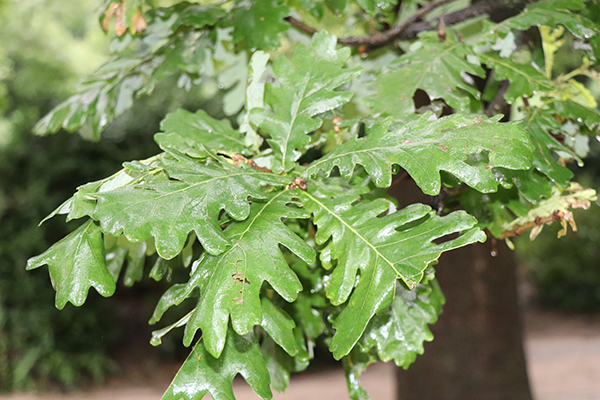
The oak processionary moth is active again. According to the Baden-Württemberg Forestry Research Institute (FVA), the caterpillars are currently in their fifth larval stage. This means they are now forming the characteristic web nests in which they stay whilst moulting and during periods of rest.
Avoid contact at all costs
The caterpillars’ fine stinging hairs are dangerous to humans. According to the FVA, they can cause skin redness, swelling, itching and irritation to the eyes, mouth and throat. Direct contact with caterpillars and web nests should therefore be avoided at all costs.
Affected areas are being treated
Many towns and cities, such as Tübingen, have taken action against the oak processionary moth again this year. This has included playgrounds and sports fields, trees near school playgrounds, as well as public roads and paths. The biocide ‘Foray ES’ was used for the treatment. During this time, the affected areas were cordoned off. Once the treatment solution had dried, they were usable again.
Preventative spraying no longer advisable
According to the FVA, the caterpillars are now at a stage of development where preventative measures using approved products are no longer effective. In sensitive areas such as nurseries, schools, parks or playgrounds, it may be advisable to have the webs removed mechanically. However, the FVA points out that such work is labour-intensive and, due to the health risks, should only be carried out with protective equipment and specialist knowledge.
What those affected should do
Anyone who sees caterpillars or webs on oak trees should keep their distance and not touch them. Even abandoned webs may still contain stinging hairs. If you experience symptoms such as severe itching, a rash, eye irritation or breathing difficulties, it is advisable to see a doctor.
Further information:
https://www.fva-bw.de/daten-tools/monitoring/eichenprozessionsspinner/aktuelle-situation
tun26061101