

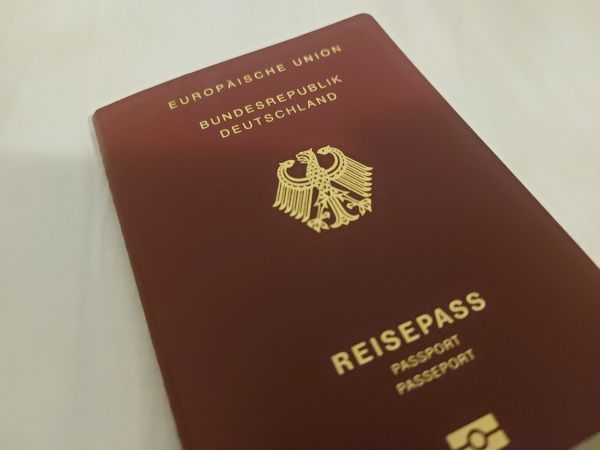
Just under 117,000 people who are considered stateless live in Germany. This is reported by the Mediendienst Integration, citing the Central Register of Foreigners. As a result, those affected face many difficulties in their daily lives: They are not allowed to vote in any country in the world, have trouble traveling or finding work, getting married, or obtaining a driver’s license. Furthermore, no country feels responsible for providing them with consular protection.
Where do stateless people come from?
Statelessness is often closely linked to the major conflicts in Syria and the Middle East. The number of stateless people has declined slightly in recent years since peaking in 2022 at over 124,000. Many stateless people had lived in Syria or Lebanon before fleeing to Germany. Some of them, such as Kurds from northern Syria, were already stateless there. “Palestinians are also frequently stateless, including Palestinian refugees from Lebanon or Syria, or people from the West Bank and the Gaza Strip,” writes the Mediendienst Integration. At the end of 2025, approximately 28,000 people were recognized as stateless in Germany. About 47 percent of them were born in Syria. The nationality of 88,494 people remains unclear. More than a third of the stateless individuals are minors. Those recognized as stateless receive a passport for stateless persons. Those whose nationality is still under review do not even have this option.
How does one become stateless?
According to the UN Refugee Agency (UNHCR), statelessness can have many causes. For example, the UNHCR notes that a government may arbitrarily revoke a citizen’s nationality. Sometimes administrative issues arise—such as when the principle of descent and the principle of territory clash in nationality law, leading to complications. High fees or unrealistic deadlines can also result in statelessness. The same applies when someone marries a citizen of another country and is consequently stripped of their citizenship. Other causes include a lack of registration or the voluntary renunciation of citizenship without having acquired a new one. In addition, children of stateless parents become stateless themselves.
Statelessness is inherited
The situation is particularly difficult for children of parents whose nationality is still unresolved; as a result, these children are not recognized as stateless and do not have a permanent right of residence. Under German nationality law, children of foreign parents do not automatically receive German citizenship, but only if one parent has been legally residing in Germany for at least five years at the time of the child’s birth and holds a permanent right of residence. As a result, many stateless persons are born in Germany: In 2024, 35 percent of people with unresolved nationality were born in Germany. Even among recognized stateless persons, the figure was still 18 percent, according to Mediendienst Integration.
Facilitated Naturalization
Nevertheless, there is a path to a German passport even for stateless persons. This is governed by Article 38 of the Convention Relating to the Status of Stateless Persons. In Germany, stateless persons can therefore be naturalized through discretionary naturalization after just five years of lawful residence.
According to Mediendienst Integration, 3,256 recognized stateless persons (2024: 4,135) and 2,628 persons of undetermined nationality (2024: 1,825) were naturalized in Germany last year. On average, they had previously lived in Germany for just over nine years.
Children born in Germany to stateless parents have a special right to naturalization under Article 2 of the Act on the Reduction of Statelessness if the following conditions are met: They are stateless at birth in Germany, have resided legally in Germany for five years, submit the application before turning 21, and have no convictions for a prison sentence or juvenile sentence exceeding five years.
tun26081904